Electric fireplaces are simple to use but tough on power. The right surge protector keeps heat, motors, and control boards safe when the voltage jumps. Pick poorly and you risk tripped protection, overheating, and even fire. Pick well and you get steady performance, longer life, and peace of mind. This guide shows you what to check before you buy. You will see why wattage capacity matters, why the UL mark is a must, how joule rating and response time affect real protection, and which safety features help prevent trouble. Each point is explained in plain language so you can choose with confidence.
Now let us move to the key takeaways.
Key Takeaways
-
Choose a surge protector with a wattage capacity of at least 2,500 watts to prevent overheating and fire hazards.
-
Always look for UL certification on surge protectors to ensure safety and reliability for your electric fireplace.
-
Choose a surge protector with a joule rating of 2,000 or higher to protect against power surges and extend the lifespan of your appliance.
Surge Protector for Electric Fireplace: Key Features
Choosing the right surge protector for electric fireplace use can make a significant difference in both safety and performance. You need to understand what features matter most before making a purchase. Electric fireplaces draw more power than many other household devices, so not every surge protector will work. If you select a surge protector that cannot handle the load, you risk overheating, equipment damage, or even fire.
Manufacturers design electric fireplaces with specific electrical needs, and using the wrong surge protector can void warranties or cause insurance issues. By focusing on the right features, you protect your investment and keep your home safe.
Below, you will find the most important features to look for in a surge protector for electric fireplace use. Each feature plays a unique role in protecting your appliance and your home.
Wattage Capacity
Wattage capacity is the first thing you should check when selecting a surge protector for electric fireplace use. Electric fireplaces often require a high-power supply, especially models rated at 1,500 watts or more. If you use a surge protector with a lower capacity, it may overheat or fail.
To determine if a surge protector is compatible with your electric fireplace, follow these steps:
-
Check the electrical capacity of the surge protector to ensure it can handle the load of your electric fireplace.
-
For a 1,500-watt unit, make sure the circuit supports at least 15 amps.
-
Avoid using extension cords with your electric fireplace.
A high-wattage surge protector ensures your appliance runs safely and efficiently. Always match the wattage rating of the surge protector to the requirements of your electric fireplace.
UL Certification
UL certification is a mark of safety and reliability. When you choose a surge protector for electric fireplace use, always look for the UL mark. This certification means the product has passed strict safety tests and meets industry standards.
If you use a non-certified surge protector, you expose yourself to several risks:
-
Electric shock risks
-
Equipment damage
-
Liability exposures and insurance claim denials
-
Potential injuries or fatalities
-
Legal implications, including trademark violations and product recalls
You should never compromise on certification. UL-certified surge protectors provide peace of mind and help you avoid serious consequences.
Joule Rating
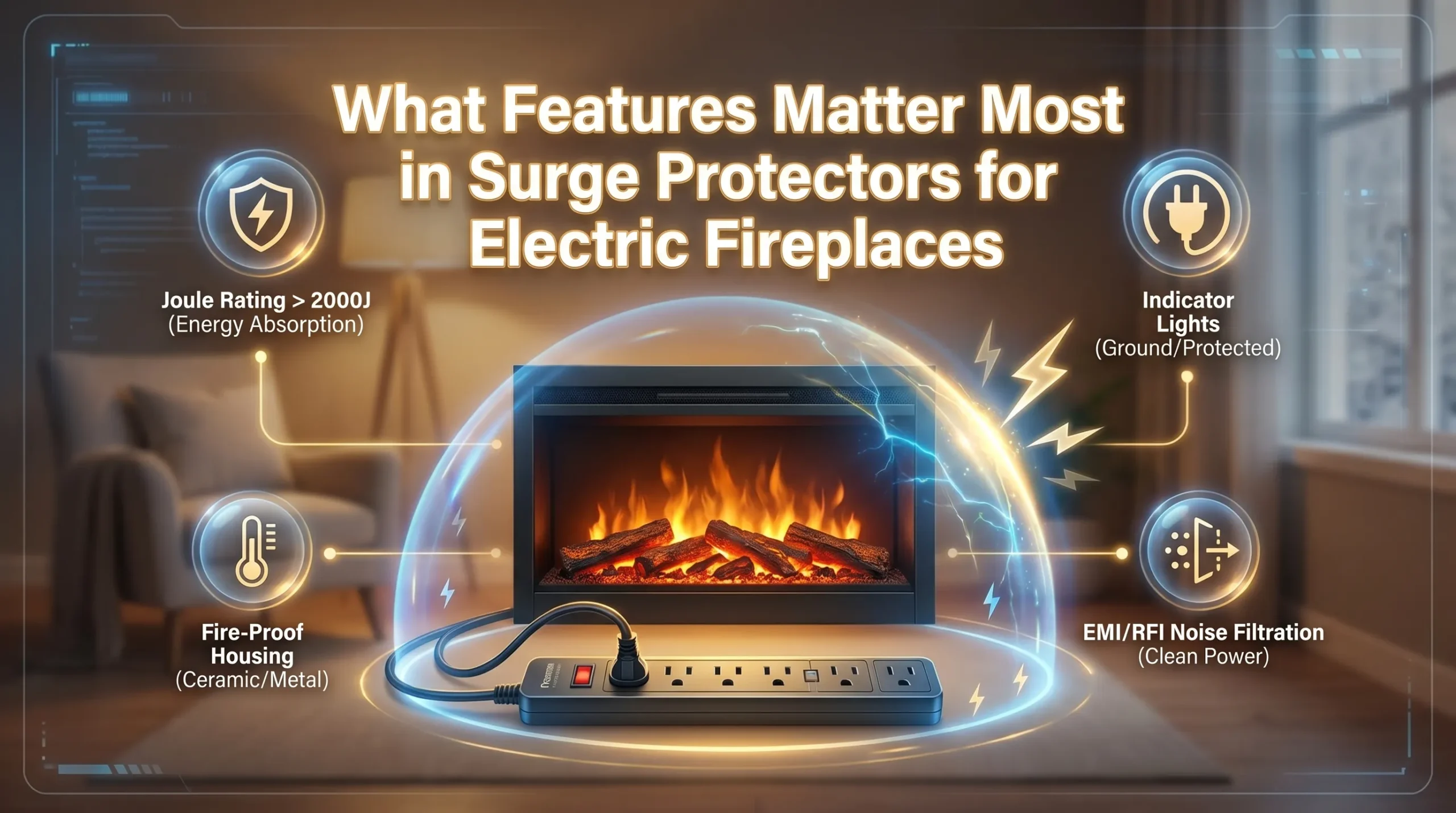
Joule rating measures how much energy a surge protector can absorb before it fails. For electric fireplaces, you need a surge protector with a minimum joule rating of 2,000 joules. If you have a more valuable or sensitive electric fireplace, aim for 3,000 joules or more.
A higher joule rating means the surge protector can handle more power surges over its lifetime. This increases both the lifespan and effectiveness of the surge protector for electric fireplace use. You protect your appliance from repeated surges and reduce the risk of damage.
Response Time
Response time tells you how quickly a surge protector reacts to a power surge. For electric fireplaces, fast response is critical. High-quality surge protectors respond in under 1 nanosecond. This speed helps prevent damage from sudden voltage spikes, which can cause electrical fires or appliance failure.
A surge protector with a fast response time shields sensitive electric fireplace components from harm. You reduce the risk of costly repairs or replacements.
Safety Mechanisms
Built-in safety mechanisms add another layer of protection. Standard surge protectors are not suitable for electric fireplaces because they cannot handle high-wattage appliances. You should use a heavy-duty surge protector designed for high-power devices.
Some of the most effective safety mechanisms include:
-
Heavy-duty construction for high-wattage appliances
-
Thermal fuses or cut-offs that interrupt power if temperatures rise too high
-
Automatic shutoff features that prevent overheating
Thermal cut-offs work like circuit breakers. They stop the flow of electricity when the temperature exceeds safe levels. This prevents overheating and lowers the risk of fire hazards. For the best results, plug your electric fireplace directly into a wall outlet or use a surge protector specifically rated for high-power appliances.
By focusing on these key features, you ensure your surge protector for electric fireplace use delivers the safety and reliability you need.
Safe Usage and Common Mistakes
You want your electric fireplace to run safely and efficiently. To do this, you must avoid common mistakes that can lead to hazards or damage. Many homeowners make errors when using a surge protector with an electric fireplace. These mistakes often involve using the wrong type of surge protector, overloading circuits, or ignoring installation guidelines.
Avoiding Overload
Overloading a surge protector is a serious risk. Electric fireplaces draw a lot of power, especially when you use the heating feature. Standard surge protectors cannot handle this high-power demand. Overload can cause overheating, damage your electric fireplace, or even start a fire. You should always calculate the total wattage of all devices you plan to connect:
-
Find the wattage of each device on its label or in the manual.
-
Use a watt meter if you need to measure actual power use.
-
Add up the wattage for all devices.
-
Check your circuit’s capacity by multiplying the breaker’s amps (usually 15 or 20) by 120 volts.
-
Make sure the total load stays below the circuit’s limit.
Following Manufacturer Instructions
You should always follow the manufacturer’s instructions for your electric fireplace and surge protector. These guidelines help you avoid using low-rated surge protectors or extension cords. Using the wrong cord can cause voltage drops, poor performance, or fire hazards. Never use damaged cords or hide them under rugs.
Proper Installation
Safe installation protects your home and your electric fireplace. The best practice is to plug your electric fireplace directly into a wall outlet or use a surge protector rated for high-power appliances. If you install a surge-protected outlet, turn off the power at the breaker, connect wires as directed, and test the system before use. Avoid using extension cords for long periods, as they can overheat and cause fires.
When you choose a surge protector for your electric fireplace, look for proper wattage, UL certification, a high joule rating, fast response time, and built-in safety mechanisms. These features help your electric fireplace avoid overheating and fire hazards. Use this checklist for your high-power appliance:
-
Check wattage capacity
-
Confirm UL certification
-
Review joule rating
-
Verify fast response time
-
Ensure safety mechanisms
Always follow manufacturer instructions to protect your electric fireplace.
FAQ
What surge protector should you use for an electric fireplace?
You should use a surge protector rated for high-power devices. Check that it matches the wattage of your electric fireplace and has UL certification.
What happens if you use a low-rated surge protector with an electric fireplace heater?
A low-rated surge protector can overheat. You risk damaging your electric fireplace heater or causing a fire. Always choose a surge protector designed for high-power appliances.
What features make a surge protector safe for electric fireplaces?
Look for UL certification, a high joule rating, fast response time, and built-in safety mechanisms. These features protect your electric fireplace from electrical surges and hazards.