Plugging one surge protector into another might look like an easy way to add outlets, but it can lead to real trouble. Daisy chaining can overload a circuit, create heat, and raise the risk of fire. It can also weaken the protection you think you have, leaving TVs, computers, and smart devices exposed to spikes. Codes and manufacturers warn against this setup for good reasons, and there are safer ways to power multiple devices without putting your home at risk.
In this post, you will learn why doubling up reduces protection, which rules and warnings apply, and simple steps that keep your gear safe. You will also get practical tips to manage power the right way, from picking better devices to spreading loads across circuits.
Before we continue, here are the key takeaways.
Key Takeaways
-
Never plug one surge protector into another. This practice, known as daisy chaining, increases the risk of fire and equipment damage.
-
Use high-quality surge protectors with built-in circuit breakers. Replace them every three to five years to ensure maximum protection.
-
Distribute devices across different outlets and unplug them when not in use. This helps prevent overload and reduces surge risks.
Can You Double Up Surge Protectors?
Overload and Fire Risks
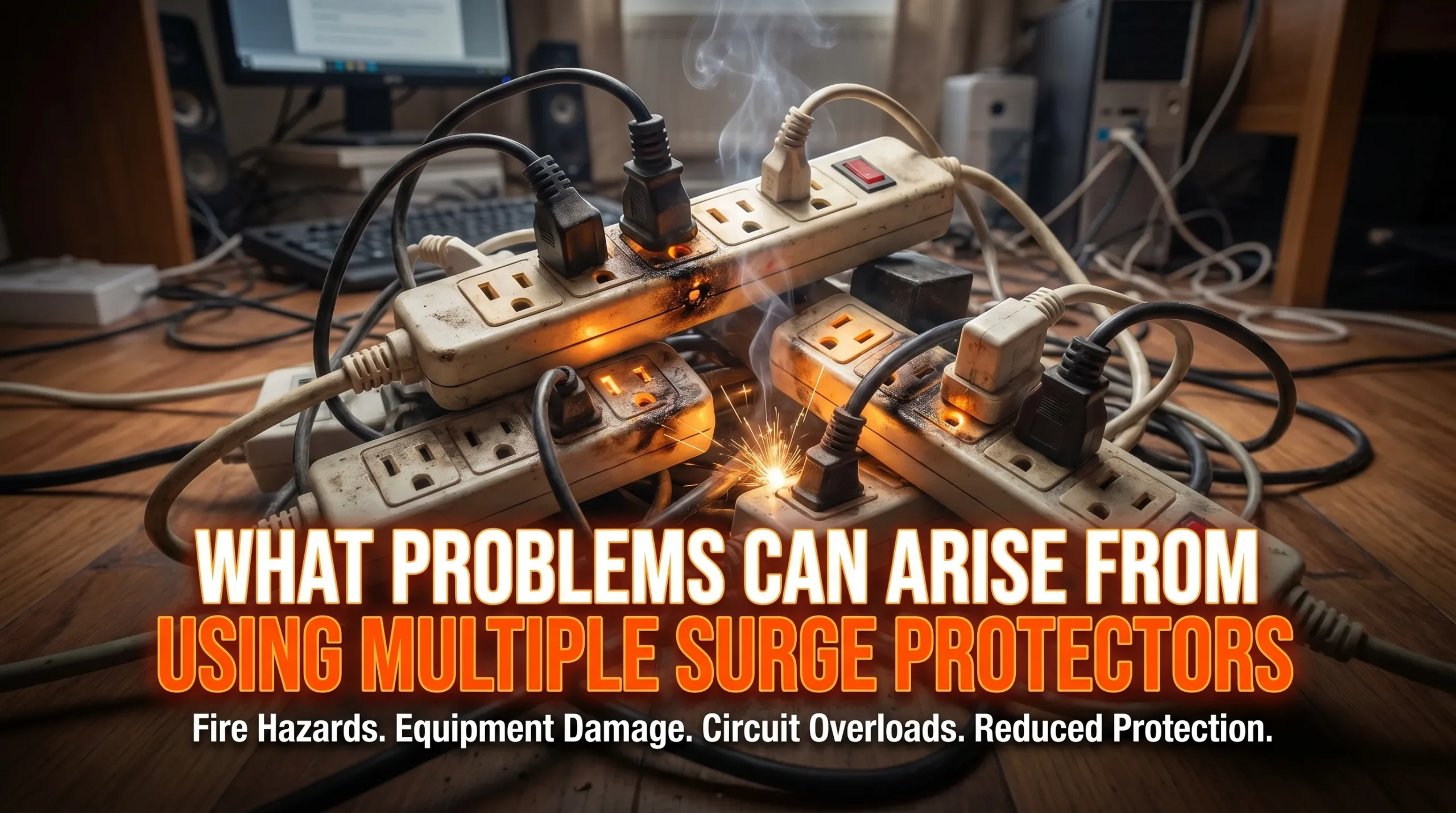
When you ask, can you double up surge protectors, you need to know the risks. Plugging a surge protector into a surge protector, also called daisy chaining surge protectors, creates a serious fire hazard. You increase the chance of overloading electrical circuits. This can cause overheating, sparks, and even fires. Each surge protector receptacle has a limit for how much electricity it can handle. If you connect a surge protector to another surge protector, you may exceed this limit without realizing it.
Note: Electrical malfunctions involving surge protectors and power strips cause nearly 51,000 home fires every year. These fires result in about 500 deaths and over 1,400 injuries. Many of these incidents happen because people overload or misuse surge protectors, especially by daisy chaining surge protectors.
Older homes often have fewer outlets, so you might feel tempted to double up surge protectors. This practice increases the risk of fire and violates safety guidelines. Most surge protectors can only handle four to six devices. If you plug in more, you can cause a circuit overload. The wall outlet may supply more power than it is rated for, which increases the fire risk.
Reduced Surge Protector Effectiveness
You may think that using two surge protectors gives you double the protection, but the opposite is true. When you double up surge protectors, you weaken the grounding pathway. This means your devices are more exposed to electrical spikes and surges. The surge protector receptacle cannot safely direct excess voltage away from your electronics. As a result, your computers, TVs, smart home devices, and kitchen appliances can suffer sudden shutdowns, display problems, or even complete failure.
A high-quality surge protector is designed to absorb a certain amount of surge energy. If you daisy chain surge protectors, you reduce the effectiveness of each device. Large appliances like HVAC systems and refrigerators can also be affected. Internal surges can degrade sensitive electronics over time, leading to expensive repairs or replacements.
Tip: Always check the wattage of your devices before you install surge protector units. Most standard surge protectors can handle up to 15 amps or about 1,800 watts. Using more than this can cause overheating and damage.
NEC Code and Manufacturer Warnings
You should always follow safety guidelines and electrical codes when using surge protectors. The National Electrical Code (NEC) and other safety organizations have clear rules about daisy chaining surge protectors. The table below shows some important regulations:
|
Regulation |
Description |
|---|---|
|
NEC Section 406.11 |
Prohibits plugging a power strip into a surge protector to prevent exceeding electrical capacity. |
|
OSHA Standard 1910.303 |
Addresses dangers of daisy-chaining surge protectors, emphasizing safety. |
|
NEC Article 110.3(B) |
Highlights the importance of maintaining a safe electrical environment. |
Manufacturers also warn against doubling up surge protectors. Most product manuals state that you should never have a surge protector plugged into surge protector. This practice can void warranties and increase the risk of fire, shock, or electrocution. Product recalls have happened because of overheating, faulty components, and improper grounding. Millions of surge protectors have been recalled due to these safety risks.
The 2023 NEC update now requires you to install surge protector devices in all dwelling units. These rules help protect your home from surges and electrical fires. Following safety guidelines keeps your family and electronics safe.
If you wonder, can you double up surge protectors, remember that the answer is no. You risk fire, device damage, and loss of protection. Always use a high-quality surge protector as directed and never daisy chain surge protectors.
Safer Alternatives and Power Management
Safer Surge Protector Use
You can manage multiple devices safely without doubling up surge protectors. Choose high-quality surge protector models with built-in circuit breakers and UL 1449 labels. Place each surge protector close to your devices to minimize cord length and reduce the risk of a surge traveling a long path. Replace your surge protector every three to five years or after a major surge event. Use surge protectors for sensitive electronics like computers, TVs, and medical devices. Never use all outlets on a single surge protector at once.
Power Management Tips
You can prevent overload and improve safety by following these tips:
-
Distribute your devices across different outlets and circuits.
-
Unplug devices when not in use to save energy and reduce surge risk.
-
Schedule charging times for phones and laptops to avoid high power draw.
-
Use smart plugs that cut power when devices are fully charged.
-
Monitor your total power consumption with a wattmeter.
Fire safety organizations recommend regular electrical maintenance. Check for wear and damage on your surge protector and cords. Avoid using extension cords as a permanent solution.
|
Strategy |
Description |
|---|---|
|
Inspect surge protectors and outlets for damage and compliance. |
|
|
Promote Safe Electrical Practices |
Avoid overloading outlets and using damaged equipment. |
|
Avoid Extension Cords as Permanent Wiring |
Use surge protectors and outlets as intended, not as long-term fixes. |
Expert Recommendations
Electrical engineers suggest you install surge protectors as close as possible to your devices. Use short, straight cables to reduce resistance and improve surge protection. Select surge protectors with indicator lights and appropriate voltage ratings. If you have many devices, consider a whole-house surge protector for added safety.
You face real dangers when you double up surge protectors. Fire hazards and reduced surge protection threaten your devices and safety. Follow safety codes and use these steps:
-
Install a surge protector for each critical device.
-
Replace surge protectors every one to three years.
-
Keep wire lengths short for better surge protection.
Check connections often and contact an electrician if you notice problems.
FAQ
What happens if you plug a surge protector into another surge protector?
You risk overheating, fire, and reduced surge protection. You should avoid this setup to keep your devices and home safe.
What devices should you connect to a surge protector?
You can connect computers, TVs, and sensitive electronics. Avoid plugging in large appliances or high-power tools.
What is a surge and how does it affect your electronics?
A surge is a sudden increase in voltage. It can damage your electronics, cause malfunctions, or shorten their lifespan.