You can achieve reliable solar panel lightning protection for your home. Most homeowners never experience lightning-related damage—fewer than 0.5% of installations see issues each year. You protect your system best by using grounding, surge protection devices, lightning rods, and correct wiring. Regular inspections and weather monitoring keep your panels ready for storms. Taking these proactive steps not only shields your investment but also gives you peace of mind.
Understanding how lightning can affect your solar panels helps you stay prepared and confident.
Key Takeaways
-
Protect your solar panels by using grounding, surge protection devices, and lightning rods. These methods work together to reduce damage risk.
-
Regularly inspect your solar panel system for signs of lightning damage, such as scorch marks or error messages. Early detection helps prevent costly repairs.
-
Understand your insurance coverage for lightning damage. Most policies cover direct strikes, but check for specific details to ensure your investment is protected.
-
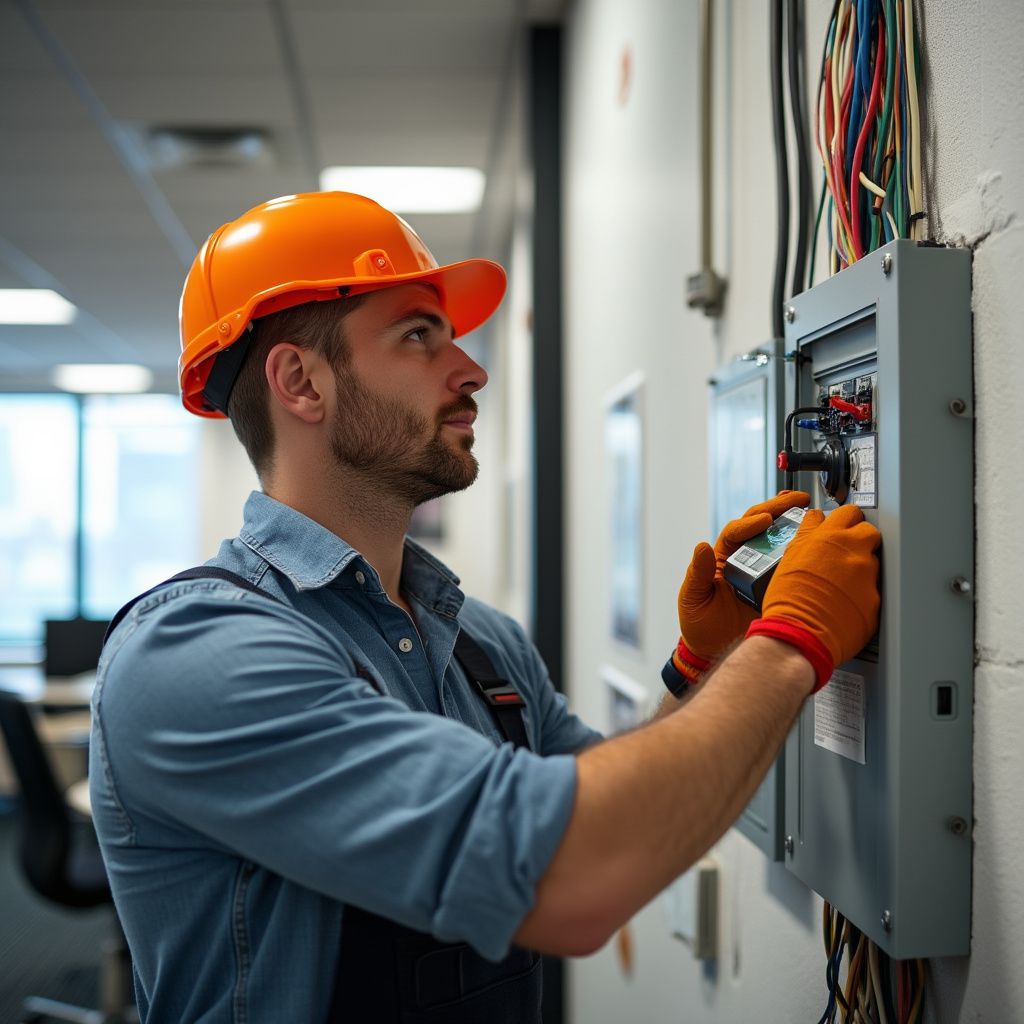
Hire qualified professionals for installation and maintenance of lightning protection systems. Their expertise ensures compliance with safety standards and effective protection.
-
Combine multiple protection methods for the best results. Each technique addresses different risks, enhancing the overall safety of your solar panel system.
Understanding Lightning Damage Risks
You want to protect your solar panels from unexpected threats. Lightning damage poses a real risk, especially during stormy seasons. Understanding how lightning strike events affect your system helps you make informed decisions.
How Lightning Affects Solar Panels
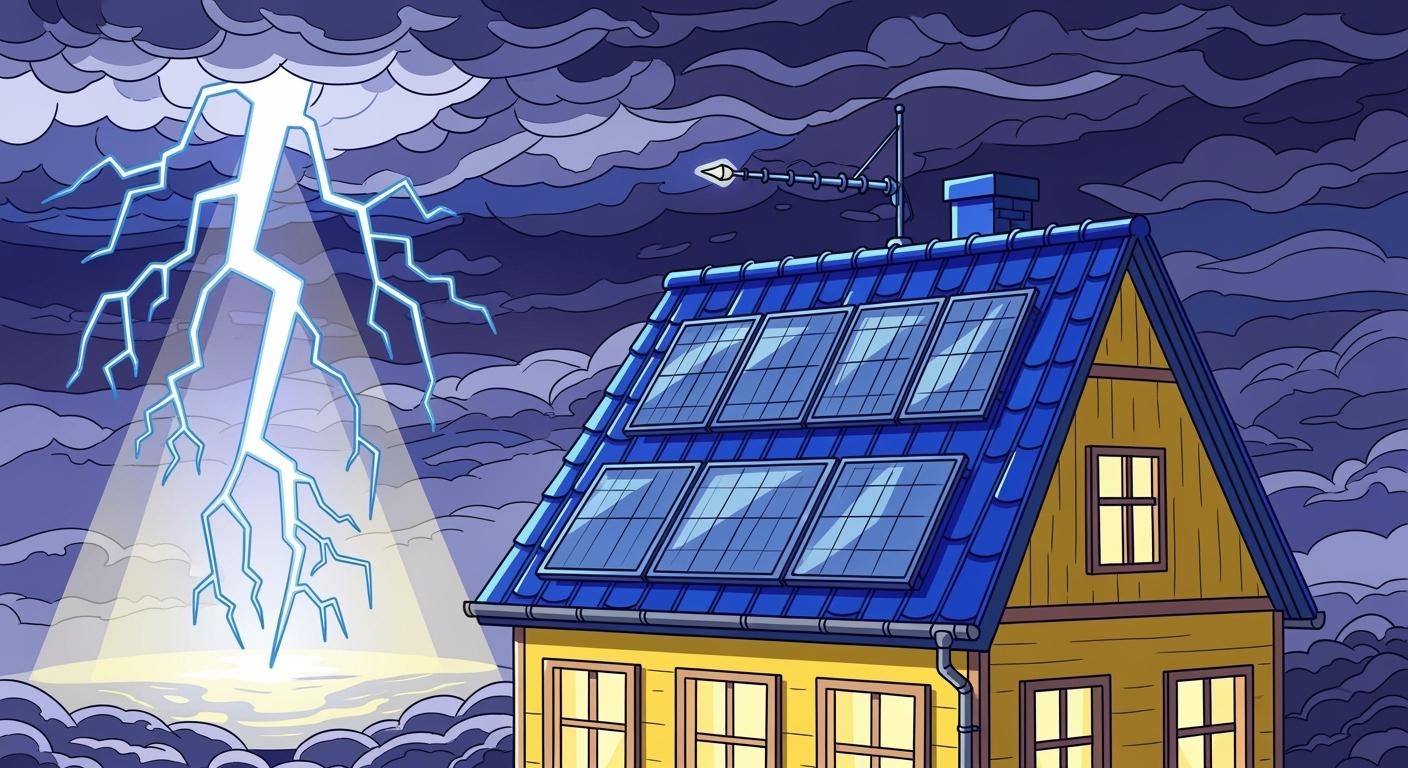
A lightning strike can send a powerful surge through your solar panel wiring. This surge may melt or burn wires, fuses, and the inverter. The intense heat can start fires in electrical components. Sometimes, the strike cracks the surface of panels and destroys photovoltaic cells. Even if your system survives, batteries and inverters may suffer long-term damage, reducing efficiency.
Indirect effects include electromagnetic pulse interference and ground potential rise. These issues can cause bypass diode breakdown or cell burn-out. In severe cases, your entire solar system may go offline.
Factors That Increase Lightning Risk
Your location and installation type influence the risk of lightning damage. Rooftop solar panels are more vulnerable because they sit at the highest point of your home. Portable units on the ground face less risk unless placed in open fields. Valleys or dense forests offer more protection. If you live in an area with frequent storms, your risk increases.
|
Installation Type |
Risk Level |
Notes |
|---|---|---|
|
Rooftop |
High |
Highest point exposed |
|
Ground (open) |
Medium |
Depends on geography |
|
Ground (protected) |
Low |
Valleys, forests safer |
Signs of Lightning Damage
Lightning does not need to strike directly to cause problems. Nearby strikes can create surges that fry the inverter and trip circuit breakers. After a storm, check your panels for scorch marks, cracks, or discolored areas. Burn marks around the junction box or wiring signal electrical damage. Look at the inverter display for error messages or abnormal readings. Direct lightning strikes may leave visible scorch marks on the roof and burn marks on junction boxes. These signs indicate severe electrical trauma and possible diode failure.
Essential Solar Panel Lightning Protection Methods
You can take several practical steps to achieve reliable solar panel lightning protection. Each method works together to reduce the risk of damage and keep your system running safely. Understanding these strategies helps you make informed decisions for your home.
Grounding and Ground Rods
You create a safer environment for your solar panels by using effective grounding. Grounding gives excess electrical energy a direct path into the earth. This process lowers the risk of equipment damage, electrical shocks, and fires. You also meet electrical safety codes when you install proper grounding.
-
Grounding provides a safe path for excess electrical energy to dissipate into the earth.
-
This process reduces the risk of equipment damage, electrical shocks, and fires.
-
Grounding ensures compliance with electrical safety codes.
-
Lightning rods attract lightning strikes and channel the energy into the ground, protecting solar panels.
You should install ground rods at key points in your system. These rods connect all metal frames and electrical parts. You increase the effectiveness of your lightning protection by making sure the grounding system has low resistance and resists corrosion. You also improve safety by connecting all metallic and electrical parts uniformly. Effective grounding forms the foundation for all other protection methods.
Surge Protection Devices
You protect your solar panels from voltage spikes by installing surge protection devices. These devices do not absorb surges from lightning. Instead, they redirect excess energy to the ground. This action limits damage to the electrical equipment connected to your solar panels.
Surge protection devices detect abnormal voltage conditions and divert excess energy to the ground. You safeguard critical components, such as inverters and batteries, from catastrophic electrical events. To prevent high energy from damaging your photovoltaic system, you should install surge protection devices close to the inverter DC inputs and at the main electrical panel for AC protection.
|
Specification |
Description |
|---|---|
|
Maximum Continuous Operating Voltage (MCOV) |
Should exceed the maximum system voltage, e.g., 450V for a 400V solar array. |
|
Voltage Protection Level (VPL) |
Should be at least 20% lower than the surge withstand capability of protected equipment, e.g., 800V for inverters. |
|
Nominal Discharge Current (In) |
Indicates the SPD’s ability to handle repeated surges; higher ratings are better. |
|
Energy Absorption Capacity |
Measured in joules; higher ratings are beneficial in high-lightning areas. |
You should follow NEC Code requirements, especially Article 230.67 for surge protection in residential services. Keep conductor lengths between surge protection devices and protected equipment as short as possible, typically 12 inches. You improve solar panel lightning protection by considering your system architecture. String inverter systems need fewer surge protection devices, while central inverter installations may require multiple DC surge protection devices feeding a single large inverter.
Lightning Rods and Arrestors
You can greatly reduce the risk of lightning damage by installing lightning rods and arrestors. Lightning rods attract lightning strikes and channel the energy safely into the ground. This action protects your solar panels from direct hits. You should know that direct strikes are rare, but most damage comes from nearby strikes.
|
Mechanism |
Description |
|---|---|
|
Detection of voltage surge |
Activates when voltage exceeds a threshold |
|
Diversion to ground |
Safely channels excess energy into the ground |
|
Normal operation resumes |
System returns to regular state after surge passes |
Lightning rods work best when you combine them with effective grounding. You should install point discharge arresters (ESE systems) on tall buildings to divert lightning at the atmospheric level. DC surge protection devices go between solar panels and the inverter. AC surge protection devices protect the inverter from surges on the output side.
Combined Type 1+2 arresters offer protection against both direct and indirect strikes.
You can expect lightning rods and surge arrestors to reduce the risk of damage by up to 95%. However, no system provides 100% protection. Most damage results from nearby strikes, not direct hits. You increase your solar panel lightning protection by making sure your grounding system has low resistance and connects all parts uniformly.
Twisted Pair Wiring Technique
You can further protect your solar panels by using the twisted pair wiring technique. Twisting wires in a pair reduces the area between them. This configuration helps cancel out induced currents from external electromagnetic interference, such as lightning-induced surges.
-
Twisting wires in a twisted pair configuration reduces the enclosed area between the wires.
-
This configuration helps to cancel out induced currents that may arise from external electromagnetic interference, such as lightning-induced surges.
-
By ensuring that the loops created by the twisted wires are opposite in neighboring loops, the impact of induced currents is minimized.
You should use twisted pair wiring for all signal and communication lines in your solar panel system. This simple step adds another layer of lightning protection and helps keep your system running smoothly during storms.
Step-by-Step Lightning Protection for Homeowners
You can take practical steps to protect your solar panels from lightning damage. Each part of your system needs attention, from the DC side to the AC side. You also need to consider the type of installation and the value of working with qualified professionals.
Protecting the DC Side
You start by focusing on the DC side, where lightning surges often enter. You can use these steps:
-
Install surge suppressors at three key points: at the solar array, at the inverter’s DC input, and at the inverter’s AC output.
-
Place a surge protection device (SPD) in the combiner box to stop surges before they reach your home.
-
If the distance between your panels and inverter is more than 30 feet, add a second SPD before the inverter’s DC input.
Protecting the AC Side
You also need to protect the AC side, where surges can travel into your home’s electrical system. You can follow these best practices:
-
Place surge protectors near the inverter’s connection to the main power distribution cabinet.
-
Install an additional surge protector at the inverter’s AC output.
-
Add a surge protector in the main power distribution cabinet for full coverage.
|
Best Practice |
Description |
|---|---|
|
Early Design Integration |
Add surge protection devices (SPDs) during the design phase of your solar system. |
|
Multi-Stage Protection |
Use layered protection for the DC side, AC side, and communication lines. |
|
Regular Maintenance |
Inspect SPDs regularly and replace them if needed. |
|
Standards Compliance |
Make sure all protective measures meet IEC/UL standards. |
|
Site-Specific Planning |
Consider local lightning density and soil conditions. |
Roof vs. Ground Installations
You adjust your approach based on where you install your panels. Rooftop systems need extra attention because they sit higher and attract more lightning. You should use lightning rods and ensure all metal frames connect to ground rods. For ground installations, you still need surge protection and grounding, but you may need fewer lightning rods if trees or buildings offer natural shielding.
Working with Professionals
You get the best results by hiring qualified experts. You should:
-
Involve a firm that specializes in lightning protection and employs certified professionals from the Lightning Protection Institute (LPI).
-
Check that all components and systems meet standards from Underwriters Laboratories, the National Fire Protection Association, and the LPI.
Maintenance, Insurance, and Warranties
You protect your solar panels best when you combine regular maintenance with a clear understanding of warranties and insurance. This approach helps you prevent lightning damage and ensures you recover quickly if a storm affects your system.
Regular Inspection Tips
You maintain your lightning protection by inspecting your solar panels and related equipment. Surge protectors play a key role in defending your system against power spikes. You should check your system at different intervals to catch problems early.
|
Inspection Type |
Frequency |
|---|---|
|
Annual visual inspections |
Check for visible damage, loose connections, or corrosion. |
|
Semiannual inspections |
For systems exposed to harsh weather conditions. |
|
Comprehensive inspections |
Every 3–5 years to assess grounding resistance and system integrity. |
|
Inspections after major changes |
Ensure modifications haven’t compromised the system. |
|
Post-lightning strike inspections |
Determine if the system sustained any damage. |
Key Areas to Inspect:
-
System Integrity: Make sure all components stay securely fastened and undamaged.
-
Corrosion and Wear: Look for corrosion on metal parts.
-
Continuity Testing: Measure ground resistance values.
-
Surge Protection Devices: Confirm surge protectors work properly.
Understanding Warranties
You need to know what your solar panel warranty covers. Most warranties exclude lightning damage, whether from direct or indirect strikes. Lightning damage often falls under natural disasters, which manufacturers do not cover.
|
Coverage Type |
Details |
|---|---|
|
Lightning Damage |
Typically excluded unless covered by separate insurance. |
|
Lightning Damage |
Excluded from coverage for direct or indirect strikes. |
|
Lightning Damage |
Excluded as part of natural disasters coverage. |
Reviewing Insurance Coverage
You secure your investment by reviewing your homeowner’s insurance policy. Many policies cover direct lightning strikes that damage panels or inverter systems. Dwelling coverage includes anything permanently attached to your home, such as solar panels.
|
Coverage Aspect |
Description |
|---|---|
|
Lightning Strikes |
Direct lightning strikes damaging panels or inverter systems are covered. |
|
Dwelling Coverage |
Covers the structure and anything permanently attached, including solar panels. |
-
Review specific coverage for lightning strikes.
-
Check dwelling coverage limits.
-
Consider optional endorsements for equipment breakdown.
After a Lightning Event
Storms can pass quickly, but their effects on your solar panels may last. You need to act promptly after a lightning event to protect your investment and restore your system’s performance.
Inspecting for Damage
Start by checking your solar panels and related equipment for visible signs of trouble. Look for scorch marks, cracks, or melted wires on the panels and junction boxes. Examine the inverter display for error codes or warning lights. If you see tripped breakers or notice that your system is not producing power, these are clear warning signs. Take photos of any damage you find. This record will help you with insurance claims and repairs.
When to Call a Professional
You should contact a qualified solar technician if you suspect any damage. Professionals have the expertise to assess the extent of lightning damage accurately. They use specialized tools and real-world experience to test your system and identify hidden problems. Their assessment prevents costly repairs and ensures your solar panels return to full functionality safely.
|
Service Description |
Importance |
|---|---|
|
Forensic engineers assess solar farm damage |
Ensures quick and safe restoration after severe weather events. |
|
Electrical testing experience |
Critical for accurate evaluation of lightning damage. |
|
Repair and commissioning plans |
Essential for minimizing downtime and restoring functionality. |
-
Without proper lightning protection, repairs can become very expensive.
-
System downtime may lead to loss of solar power credits.
-
Professional assessment helps you avoid extensive financial losses.
Filing Insurance Claims
If you find damage, review your homeowner’s insurance policy. Most policies cover lightning strikes that harm solar panels. Contact your insurance company as soon as possible. Provide them with photos, inspection reports, and a list of damaged components. Keep records of all communication. Your insurer may send an adjuster to inspect the damage. Work with your solar installer or technician to provide repair estimates. This process helps you recover costs and restore your solar system quickly.
You protect your solar panels best by ensuring proper installation and following National Electrical Code requirements. Use reliable components and schedule regular maintenance.
-
Inspect surge protection devices for wear or damage.
-
Keep wiring connections clean and tight.
-
Replace expired surge devices quickly.
FAQ
You may still have questions about protecting your solar panels from lightning. Here are answers to some of the most common concerns:
How often should I inspect my solar panel lightning protection system?
You should inspect your system at least once a year. After major storms or any changes to your setup, check for damage or loose connections. Regular inspections help you catch problems early.
Do solar panels attract lightning to my home?
Solar panels do not attract lightning. Lightning usually strikes the highest point in an area. If your panels sit on the roof, they may be more exposed, but they do not increase your risk.
Can I install lightning protection devices myself?
You should hire a qualified professional for installation. Proper setup requires knowledge of electrical codes and safety standards. Incorrect installation can leave your system unprotected or even create hazards.
Will my homeowner’s insurance cover lightning damage to solar panels?
Most homeowner’s insurance policies cover direct lightning strikes. You should review your policy details and speak with your agent to confirm coverage for your solar panels and related equipment.