When you pick a surge protector for garage door opener, focus on these key factors: high joule ratings, UL1449 certification, a low voltage protection rating (VPR), surge-current rating, protection for all lines, and solid compatibility. Surges can fry your opener’s electronics fast. The right surge protector keeps your garage safe and reliable.
Choosing the Best Surge Protector for Garage Door Opener
Now that you know why surge protection matters for your garage, let’s break down what you should look for when picking the best surge protector for your garage door opener. You want to make sure your investment lasts and your opener stays safe, even during the worst storms or power spikes.
Surge Protection Rating
When you shop for a surge protector for garage door opener, the surge protection rating is the first thing you should check. This rating, measured in joules, tells you how much energy the device can absorb before it fails. The higher the joule rating, the better the protection.
-
The minimum recommended joule rating for surge protectors is 2,000 joules.
-
For valuable equipment like garage door openers, a rating of 3,000 joules or more is even better.
A surge protector with a higher joule rating can absorb more energy from power surges. This means your garage door opener will last longer and face fewer failures. If you want stable power and fewer headaches, go for a surge protector with at least 1,000 joules, but aim higher if you can.
Low Voltage Protection Rating (VPR)
The voltage protection rating (VPR) shows how much voltage gets through the surge protector during a surge. Lower numbers mean better protection. If you want the best surge protector for your garage door opener, look for a low VPR. This keeps your opener’s sensitive electronics safe from even small spikes.
UL1449 Certification
You should always check for UL1449 certification when buying surge protection devices. This certification means the surge protector meets strict safety and performance standards. Here’s what UL1449 covers:
|
Requirement |
Description |
|---|---|
|
Clamping Voltage |
The voltage where the surge protector activates to redirect surges to ground. Lower is better. |
|
Voltage Protection Rating |
Shows how well the surge protector blocks surges. |
|
Thermal Fuse Protection |
Prevents fire hazards by shutting down if the device overheats. |
|
All-Mode Protection |
Protects against surges on all electrical lines (hot, neutral, ground). |
If you see UL1449 on the box, you know you’re getting a surge protector that’s been tested for real-world surges.
Surge-Current Rating
The surge-current rating tells you how much current the surge protector can handle during a big surge, like from a lightning strike. You want a device that can take a hit and keep working. Here’s a quick look at some common ratings:
|
Product Name |
Surge Protection Rating |
|---|---|
|
Tripp Lite 2-Outlet |
1410 joules |
|
Best Single Outlet Surge Protector |
660 joules |
|
Tripp Lite Isobar Ultra – Surge Protector |
3330 joules |
Surge protectors with higher surge-current ratings use advanced tech like metal oxide varistors (MOVs) and gas discharge tubes. These features help absorb and redirect high-energy surges, keeping your garage door opener safe during major power events.
-
Surge protectors with higher surge-current ratings are designed for big surges, like lightning.
-
They use MOVs and gas discharge tubes to send extra voltage away from your opener.
-
These devices can handle high-energy surges, so your electronics stay protected.
Protection for Hot, Neutral, and Ground Lines
Your home’s electrical system has three main wires: hot, neutral, and ground. Surges can travel on any of these lines, so you need a surge protector for garage door opener that covers all three. This is called all-mode protection.
|
Wire Type |
Why Protection Matters |
|---|---|
|
Hot |
Carries power to your opener. Surges here can fry circuits. |
|
Neutral |
Completes the circuit. Surges can damage electronics. |
|
Ground |
Provides a safe path for stray voltage. Surges can cause shocks or fires. |
If your surge protector only covers one or two lines, your garage door opener could still get hit. Always check for all-mode or three-line protection.
Compatibility and Type
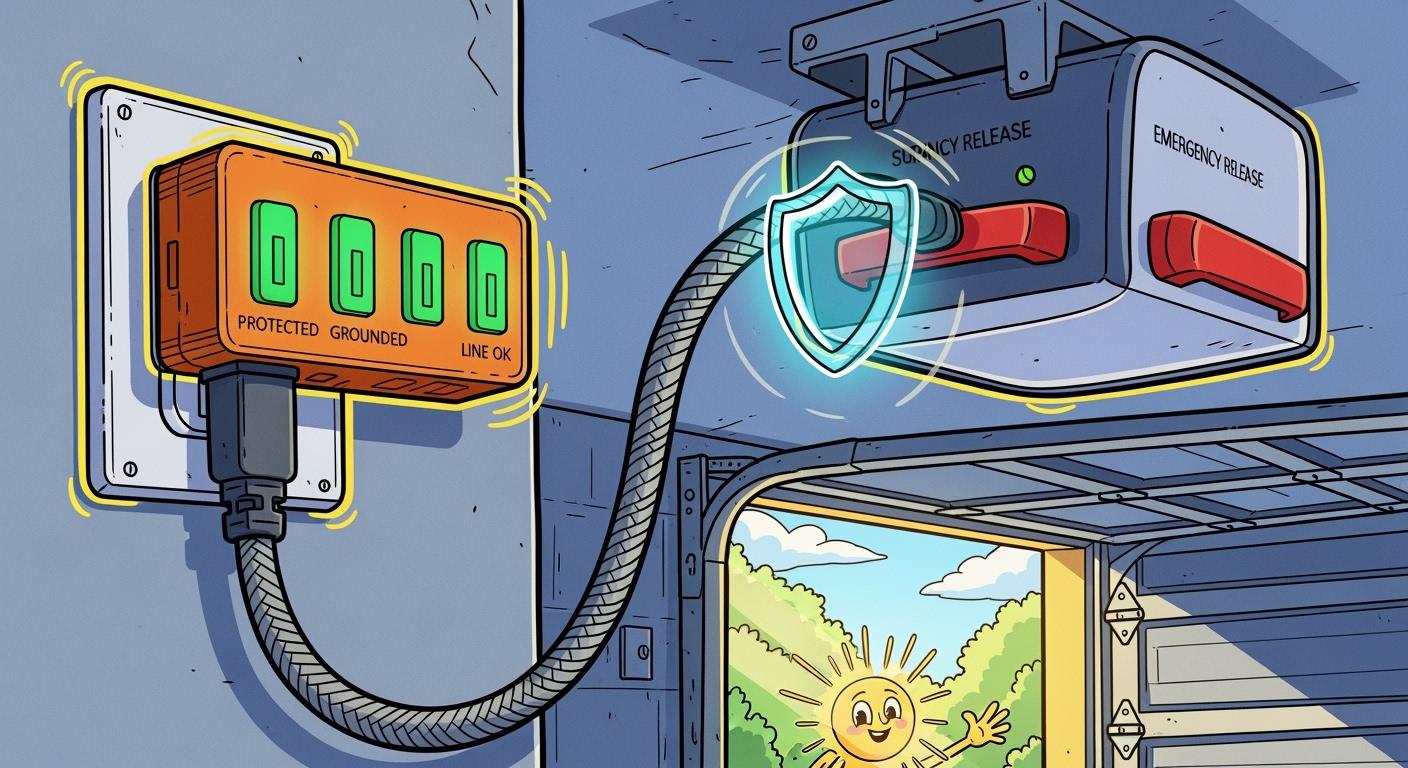
Not all surge protection devices fit every garage setup. You want a surge protector for garage door opener that matches your opener’s power needs (usually 125VAC and 15A). Look for models that plug into standard grounded outlets for easy installation. LED indicator lights are a bonus—they show you if the surge protector is working and grounded.
Here’s a quick checklist to help you evaluate surge protector specs:
|
Specification |
Description |
|---|---|
|
Surge Protection Rating |
Higher joule ratings mean better defense. |
|
Power Capacity Limits |
Make sure the surge protector matches your opener’s voltage and amperage. |
|
Installation |
Choose plug-in models for easy setup. |
|
Indicator Features |
LED lights confirm protection and grounding. |
|
Safety Certifications |
Look for UL listing for reliability. |
🛠️ Practical Advice:
Plug a dedicated surge protector into the outlet where your garage door opener connects.
If you live in an area with lots of storms or outages, consider a whole-home surge protector for extra peace of mind.
Surge protector prices can vary. Models with higher joule ratings, UL certification, and weather resistance cost more, but they offer better protection and last longer. When you choose the best surge protector for your garage door opener, you’re investing in safety and reliability for years to come.
Durability, Weather Resistance, and Support
Durability and Weather Resistance
Garages can get hot, cold, or damp. These conditions can wear out regular surge protectors fast. You want a surge suppressor that stands up to tough environments. Look for models with strong construction and fire-resistant materials. Some surge protectors use sturdy iron housing and fire-resistant ABS plastic.
Others have heavy-duty power cords that handle high power demands. If you see ETL certification, you know the device meets strict safety standards.
-
Commercial-grade surge protectors often use robust designs.
-
Fire-resistant materials help prevent damage during a surge.
-
Metal oxide components add extra durability.
-
A long warranty shows the manufacturer trusts their product.
Check the table below to see how environmental factors affect surge protectors in garages:
|
Environmental Factor |
Impact on Surge Protectors |
|---|---|
|
Temperature Fluctuations |
Can affect performance and lifespan |
|
Humidity Levels |
May lead to degradation of components |
|
Proper Placement |
Essential for ensuring longevity in challenging environments |
Warranty and Customer Support
A good warranty gives you peace of mind. If your surge protector fails, you want quick help. Choose brands that offer clear warranties and responsive customer support. A long warranty often means the company believes in their product’s durability. If you ever have questions or need a replacement, strong support makes the process easy.
Layered Protection (Type 1 and Type 2)
You can boost your garage’s defense with layered surge protection. Type 1 devices go at your main electrical panel. They block big surges from outside, like lightning strikes. Type 2 devices sit near your garage door opener. They catch any leftover surges before they reach your equipment.
-
Type 1 stops surges at the source.
-
Type 2 adds another shield right where you need it.
-
This two-step approach protects your garage door opener from voltage spikes during storms.
If you want the best protection, use both types together. Your garage door opener will thank you the next time a storm rolls through.
You want the best surge protection for valuable electronic equipment in your garage. Focus on high joule ratings, fast response time, and solid compatibility. Use this checklist to make shopping easy:
|
Checklist Item |
What to Look For |
|---|---|
|
2,000+ for sensitive electronics |
|
|
Response Time |
Less than one nanosecond |
|
Voltage Rating |
400V or less |
|
Outlets & Features |
Enough outlets, indicator lights, extra features |
Choose safety, reliability, and the right fit for your garage door opener.
FAQ
What happens if you don’t use a surge protector for your garage door opener?
You risk damage from a sudden surge. Power spikes can fry the opener’s circuit board. You might face expensive repairs or even need a full replacement.
How often should you replace a surge protector in your garage?
You should replace your surge protector after a major surge or every three to five years. Regular replacement keeps your garage door opener safe from unexpected surges.
Can a whole-home surge protector replace a plug-in surge protector for my garage?
A whole-home surge protector blocks big surges at the panel. You still need a plug-in surge protector for your garage door opener to catch smaller surges that slip through.