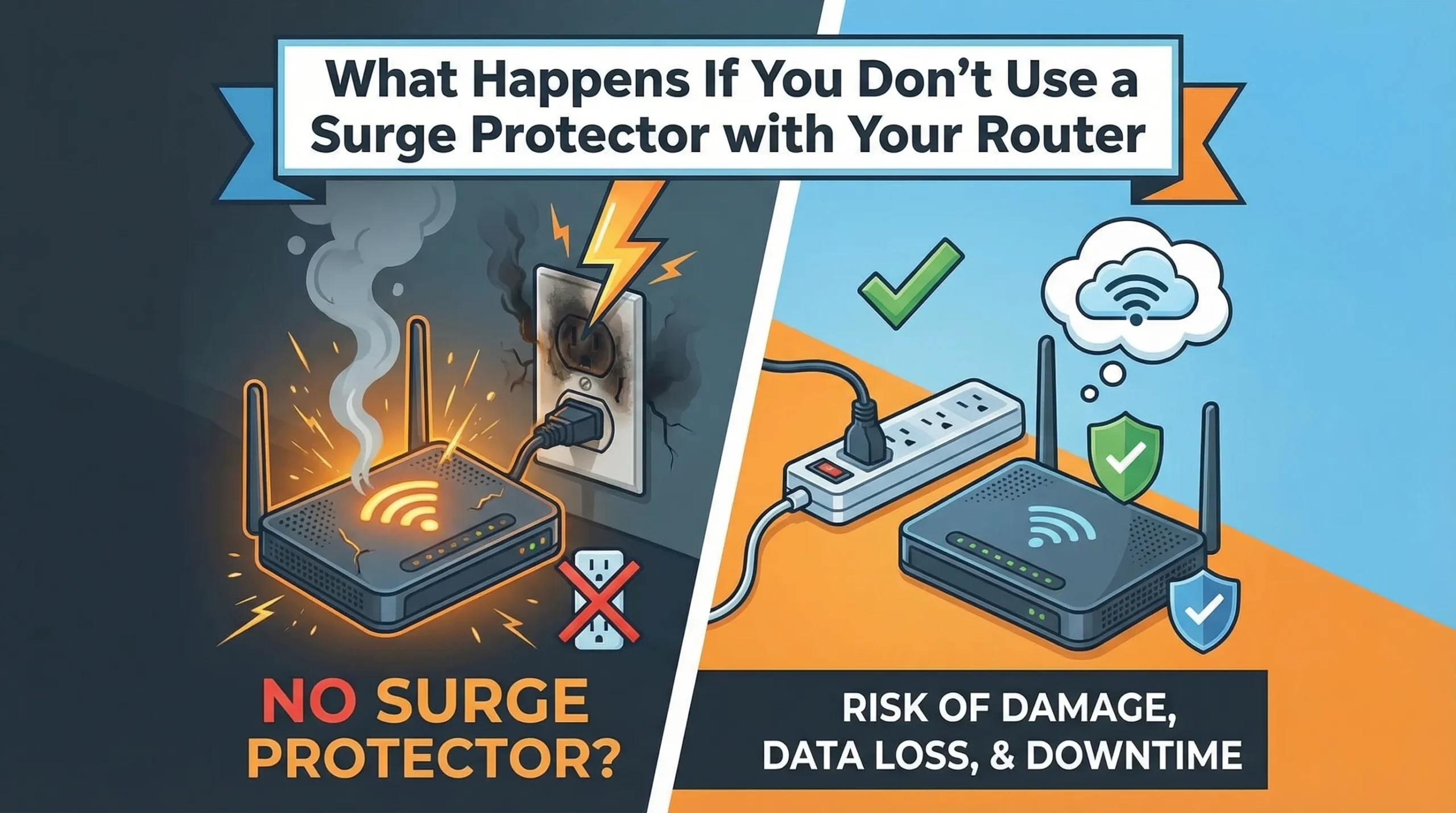
You face real risks if you skip using a surge protector for router. Fire, injury, electric shock, hardware damage, data loss, and network outages can happen. Lightning storms increase the danger, especially when your router connects to outdoor cables.
Surge protectors help you avoid these problems. Understanding how power surges cause these issues helps you protect your equipment.
What Is a Power Surge?
You need to understand what a power surge is before you can protect your router. A power surge happens when the electrical voltage suddenly increases beyond normal levels. This spike can occur for several reasons, and even a brief surge can cause serious problems for sensitive devices.
Causes of Surges
Several events can trigger a power surge. Lightning strikes often cause the most dramatic surges, especially during storms. Faulty wiring, overloaded circuits, and sudden changes in electricity supply also lead to surges. Utility companies sometimes switch power grids, which can send unexpected voltage spikes into your home.
You may not notice these surges, but your electronics do.
-
Routers and modems are particularly sensitive to voltage spikes.
-
They contain delicate circuit boards.
-
They are constantly connected to power and phone or cable lines, making them susceptible to surges traveling through these connections.
Impact on Electronics
A power surge can last only a fraction of a second, but the damage can be permanent. Sensitive electronics like routers cannot handle sudden voltage increases. You risk losing your internet connection, damaging your hardware, or even facing data loss. Every electronic device, from a television to a smartphone charger, has components designed to handle certain voltage ranges.
A power surge sends sudden spikes that exceed those tolerances.
Circuit boards, power supplies, and memory chips are especially vulnerable.
You should know that repeated surges can slowly destroy your router. You may notice slower performance or frequent disconnects. Protecting your router from power surges keeps your network stable and your data safe.
Router Surge Protection Risks
You learned how power surges can damage electronics. Now, you need to understand the specific risks you face if you do not use a surge protector for router. These risks affect your safety, your equipment, and your network reliability.
Immediate Dangers Without Surge Protector
When you leave your router unprotected, you expose yourself and your home to several immediate dangers. Surge protectors are crucial for safeguarding electronic devices from damage caused by electrical surges, particularly during lightning storms.
You may experience:
-
Fire hazards from overloaded circuits
-
Electric shock risks for anyone touching the device or nearby wiring
-
Hardware damage that can destroy your router instantly
-
Data loss if your router fails during a surge
-
Network outages that disrupt your internet access
You need to prioritize safety by using a surge protector for router. This simple device helps prevent dangerous situations and keeps your equipment secure.
Long-Term Effects on Router
You may not notice the effects of minor surges right away, but repeated exposure can slowly destroy your router. Minor power surges can gradually damage the power-regulation circuits of a router, leading to a decline in its performance and lifespan. In regions with unstable power supply, this deterioration can happen more rapidly, potentially shortening the router’s life by two to three years if protective measures are not implemented.
You might wonder why do routers burn out even when there is no visible damage. The answer often lies in repeated surges that weaken internal components over time.
Surge protection becomes even more important if your router connects to outdoor cabling. Surge protection is essential for outdoor routers because they are exposed to environmental risks like lightning and power surges. These electrical events can severely damage networking devices, leading to expensive repairs or replacements. By using surge protection, you can safeguard your equipment and maintain a reliable network connection.
You must also ensure proper grounding for your surge protector for router. Without grounding, surge protectors cannot adequately protect devices from damage. Proper grounding is crucial for effective overvoltage clamping.
Grounding allows safe diversion of surge current to the ground.
-
Surge protectors require a good ground connection to function properly.
-
IEC standards mandate that surge protectors must have a ground connection.
-
Lack of grounding prevents surge protectors from redirecting surge current, increasing risks of damage.
You protect your router, your data, and your safety by using a surge protector for router and making sure it is properly grounded. This simple step gives you reliable protection and peace of mind.
Surge Damage Signs
You learned about the risks of power surges and why surge protection matters. Now, you need to recognize the signs that your router may have suffered surge damage. Identifying these symptoms early helps you prevent further issues and protect your sensitive electronics.
Symptoms of Router Damage
When a power surge hits, your router may not stop working immediately. Instead, you might notice several warning signs that indicate trouble. Sensitive electronics often show subtle symptoms before failing completely.
-
Devices lose connection frequently, especially during video calls or streaming.
-
You need to reboot your router often to restore internet access.
-
The router feels unusually hot to the touch, which signals overheating.
-
Internet speed drops, and performance becomes unreliable.
-
The router’s lights blink irregularly or fail to turn on.
Real-Life Consequences
Ignoring these symptoms can lead to bigger problems. You risk losing your internet connection for hours or days. Downtime affects your ability to work, study, or stay connected with friends and family. Repairing or replacing a damaged router costs money and time.
-
You may need to pay for professional repairs or buy a new router.
-
Sensitive electronics can lose stored settings or data, forcing you to reconfigure your network.
-
Network outages disrupt online activities and can impact multiple devices in your home.
FAQ
You may still have questions about how to protect your electronics and keep your router safe.
Here are answers to common concerns.
What happens if I plug my router into a regular power strip?
A regular power strip only gives you more outlets. It does not offer proper surge protection. Your router stays vulnerable to a major spike in voltage, which can cause permanent damage.
How often should I replace my surge protector?
You should replace your surge protector every three to five years. Older surge protectors lose effectiveness over time. This helps you maintain reliable protection for your router and other devices.
Can a surge protector prevent data loss during a power surge?
A surge protector can help prevent data loss by shielding your router from sudden voltage spikes. It keeps your network stable and reduces the risk of losing important settings or information.
Do I need surge protection if my router connects to outdoor cables?
Yes, you need proper surge protection for routers with outdoor cabling. Outdoor cables increase the risk of a major spike from lightning or unstable power. Surge protectors help you avoid expensive repairs and downtime.
What signs show my router suffered surge damage?
You may notice frequent disconnects, slow internet, or unusual heat from your router. These signs suggest surge damage. Take action quickly to protect your electronics and restore network reliability.