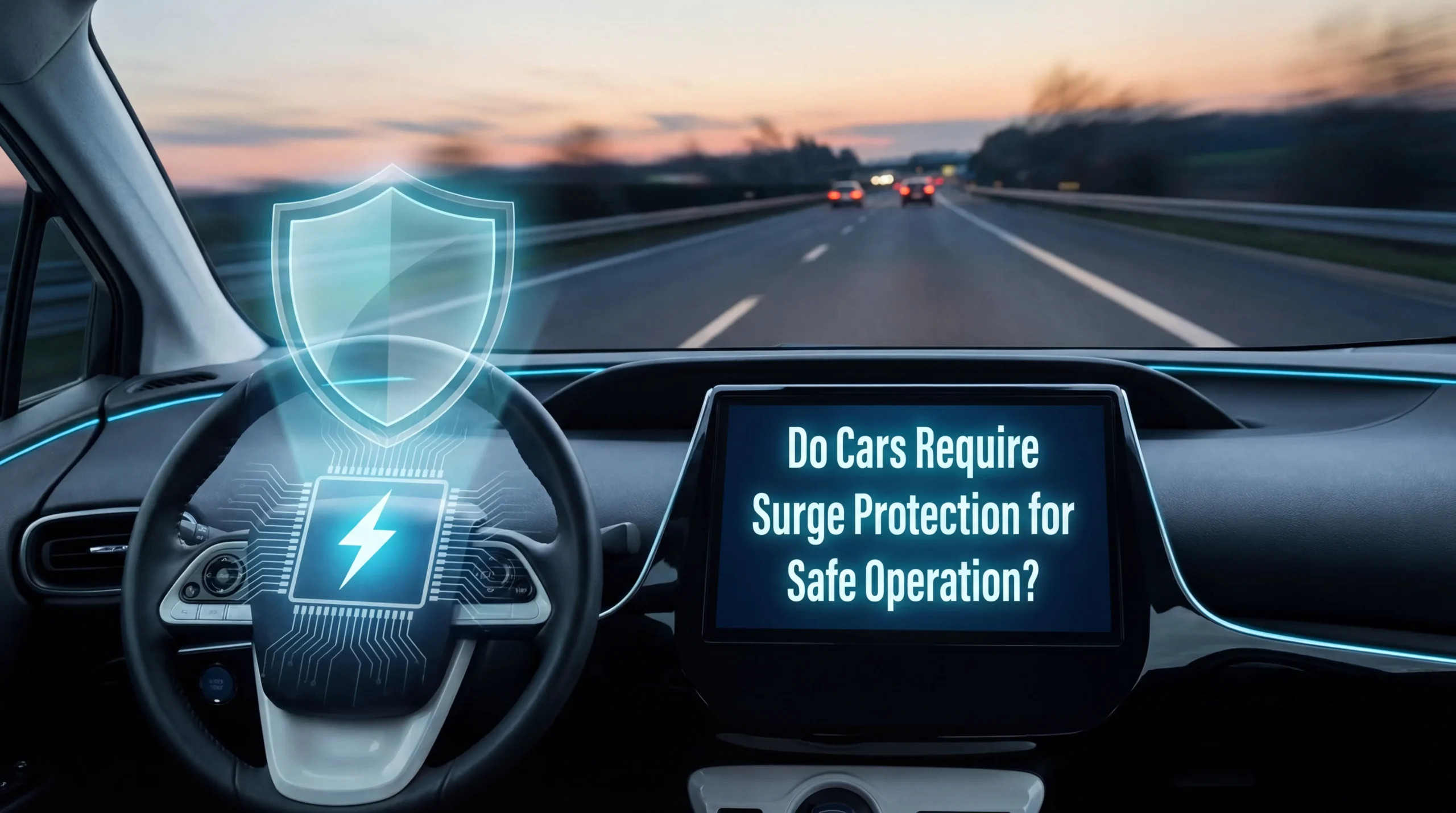
You need surge protection to keep your car’s electronics safe. Surge protection becomes essential when you use electric vehicles or charge your car at home. A surge protector for car use guards devices from voltage spikes, but surge protection cannot protect against EMPs or shield every system.
Learn how surge protection works in cars.
Surge Protection in Cars
Why Surge Protection Matters
You rely on many electronic systems in your vehicle. These systems include navigation, entertainment, and safety features. When you drive an EV, you depend on even more advanced electronics. Surge protection plays a key role in keeping these systems safe.
Automotive experts recommend surge protection for EVs and charging equipment for several reasons:
-
Surge protection keeps the charger and car safe from damage.
-
It lowers the chance of fire or shock.
-
It helps the charger last longer.
-
It ensures the charger complies with safety regulations.
-
It protects the investment made in the charger and car.
International standards, such as IEC 61643, require surge protective devices at all charging locations. These standards help keep people, property, and financial investments safe. You need a surge protector for car use to meet these requirements and protect your EV charger.
Risks Without Surge Protection
Electrical surges can happen at any time. Lightning strikes, faulty wiring, or sudden changes in power supply can cause voltage spikes. If you charge your EV at home or use an EV charging station, these surges can damage your vehicle’s sensitive electronics. Without a surge protector for car use, you risk losing important systems or facing costly repairs.
Imagine plugging your EV into an EV charger during a storm. A sudden surge could fry the charger and damage your car’s battery management system. In one real-world example, an RV owner used a surge protector for car appliances. The surge protector failed, but it still prevented damage to the microwave oven and television. Without surge protection, the RV would have suffered expensive losses. You can avoid similar problems by using a surge protector for car charging and electronics.
Limitations of Surge Protectors
A surge protector for car use offers strong defense against voltage spikes. However, you must understand its limits. Surge protectors only protect devices that are plugged in. They cannot shield your vehicle from electromagnetic pulses (EMPs) or direct lightning strikes. If you use an EV charger or visit an EV charging station, surge protection helps guard against most electrical surges, but it does not cover every threat.
You should check the surge protector for car use regularly. Make sure it works and meets safety standards. Surge protection helps your EV charger last longer and keeps your vehicle safe, but you must stay aware of its limitations. Surge protectors do not replace proper maintenance or other safety measures.
Tip: Always use surge protection when charging your EV at home or at an EV charging station. This simple step protects your investment and keeps your vehicle running smoothly.
Choosing a Surge Protector for Car
You now know why surge protection matters for your car and EV. Next, you need to choose the right surge protector for your needs. Picking the best device helps you protect your EV and its electronics for years to come.
Types of Surge Protectors
You can find two main types of surge protectors for cars: factory-installed and aftermarket. Factory-installed surge protectors come with your EV or charging equipment. These devices meet strict safety standards and work well with your vehicle’s systems. Aftermarket surge protectors let you add extra protection or upgrade older EVs. You can use surge protectors for many EV systems, such as:
-
Automotive microphones
-
Telematics and communication ECUs
-
ADAS and sensor interfaces
-
Infotainment and in-vehicle networks
Installation and Placement
You must install your surge protector correctly to get the best results for your EV. Common mistakes can reduce protection. Watch out for these issues:
-
Missing surge protection on communication lines
-
Using the wrong type of surge protector
-
High resistance in grounding
-
Skipping regular checks or tests
Place your surge protector close to the EV charger or the device you want to protect. Always follow the manufacturer’s instructions.
Compliance and Safety Tips
Surge protectors help your EV’s electronics last longer. The table below shows how they support your vehicle:
|
Aspect |
Description |
|---|---|
|
Role of Surge Protectors |
Safeguard vehicles against electrical anomalies, enhancing the reliability of electronic systems. |
|
Impact on Longevity |
Essential for maintaining the longevity of onboard electronics as vehicles become more complex. |
|
Industry Evolution |
As vehicles evolve towards greater electrification and connectivity, surge protection becomes crucial. |
You need surge protection to keep your car’s electronics safe. Insurance companies cover electrical surge damage only if you have comprehensive insurance. Surge protectors work best when you charge your EV or use sensitive devices. Modern devices offer wide voltage ranges and high surge power ratings.
FAQ
Do all cars need surge protectors?
You need surge protection most when you drive an EV or use home charging. Gas-powered cars with basic electronics usually do not require extra surge protection.
Can a surge protector stop lightning damage?
Surge protectors help with small surges. They cannot protect your car from a direct lightning strike. Always unplug your charger during storms for extra safety.
How often should you check your car’s surge protector?
Check your surge protector every six months. Look for warning lights or signs of wear. Replace it if you see damage or if it fails a test.