You may wonder if you can install a lightning protection system on your own. Proper installation keeps your home and family safe from the dangers of lightning strikes. Lightning can cause fires, electrical damage, and personal injury. A lightning protector for building reduces these risks and protects your property.
This guide gives clear steps and practical advice. When you face complex situations or have doubts, seek professional help.
Next, you will learn if installing the system yourself is possible.
Can You Install a Lightning Protection System Yourself?
DIY vs. Professional Help
You may feel tempted to install a residential lightning protection system on your own. Many homeowners want to save money and enjoy the satisfaction of a DIY project. However, you should consider the challenges before starting. Installing lightning protection requires careful planning and technical skill. Mistakes can put your home at risk.
Here is a table showing common challenges you might face without professional help:
|
Challenge |
Description |
|---|---|
|
Poor Installation Practices |
Improper installation can lead to ineffective lightning protection, increasing damage risk. |
|
Inadequate Grounding System |
A poorly designed grounding system can cause failure in dissipating electrical charge from strikes. |
|
Lack of Bonding Between Metal Components |
Unbonded metal components can lead to side flashes, causing fires or damage to electrical systems. |
|
Absence of Surge Protection Devices (SPDs) |
Without SPDs, electrical surges can damage appliances despite proper lightning diversion. |
|
System Damage from Environmental Factors |
Environmental conditions can compromise the system, leading to failures if not regularly inspected. |
|
Changes to Building Structure |
Modifications to the building may require updates to the lightning protection system for effectiveness. |
|
Insufficient Maintenance and Inspections |
Lack of routine maintenance can lead to system failures due to undetected issues. |
You may think DIY installation saves money at first. In reality, it often leads to higher long-term costs. Incorrect installation can create fire hazards and void warranties. Insurance companies may not cover damage if your system does not meet safety codes. Inferior materials in DIY kits can also compromise safety and lead to expensive repairs.
Safety and Legal Factors
You must follow strict safety standards when installing a lightning protection system. Local building codes often require specific materials and methods. If you do not meet these standards, you risk fines and legal issues.
You also put your family and property in danger.
Professional installation ensures your system meets all codes and works as intended. Certified installers know how to avoid common mistakes. They use proper materials and test the system for safety.
You gain peace of mind knowing your home has reliable protection.
Tip: Always check local regulations before starting any installation. When in doubt, consult a licensed professional.
Understanding Lightning Protection Risks
You need to understand the risks before you install a lightning protector for building. Lightning strikes can cause serious damage to homes and put your family in danger. Knowing how lightning affects buildings helps you see why lightning protection is so important.
How Lightning Affects Buildings
Lightning does not strike only tall buildings or open fields. Your home can become a target during any storm. When lightning hits a building, it can travel through wiring, plumbing, or even the structure itself. This can lead to fires, electrical surges, and structural damage.
-
Lightning strikes cause an estimated 17,400 to 31,400 fires each year in the United States.
-
Fire departments responded to an average of 24,600 lightning-related fires annually from 2004 to 2008, resulting in 12 civilian deaths and $407 million in property damage.
-
About 18% of these fires happened in homes, leading to 88% of civilian deaths and 70% of property damage.
-
Between 2002 and 2005, lightning started around 31,400 fires each year, causing 12 deaths and $213 million in damages.
You can see that the risk is real. A single strike can destroy electronics, start fires, and even cause injuries.
Why a Lightning Protector for Building Matters
A lightning protector for building gives your home a safe path for electrical energy to follow. This system reduces the chance of fire and limits damage to your property. You need lightning protection to keep your family safe and protect your investment.
-
Well-installed lightning protection systems have prevented structural damage for centuries.
-
The effectiveness of a lightning protector for building depends on proper installation and regular maintenance.
-
The cost of installing a lightning protector for building is often less than the financial risk of a lightning strike.
-
Regular inspections help you find and fix problems, making sure your lightning protection works when you need it most.
You should not ignore the need for a lightning protector for building. With the right system, you lower your risk and gain peace of mind during every storm.
Key Parts of Lightning Protection Systems
Before you begin installation, you need to understand the main components of a lightning protection system. Each part plays a unique role in keeping your home safe from lightning strikes.
Knowing how these elements work together helps you make informed decisions and ensures your system operates effectively.
Air Terminals and Placement
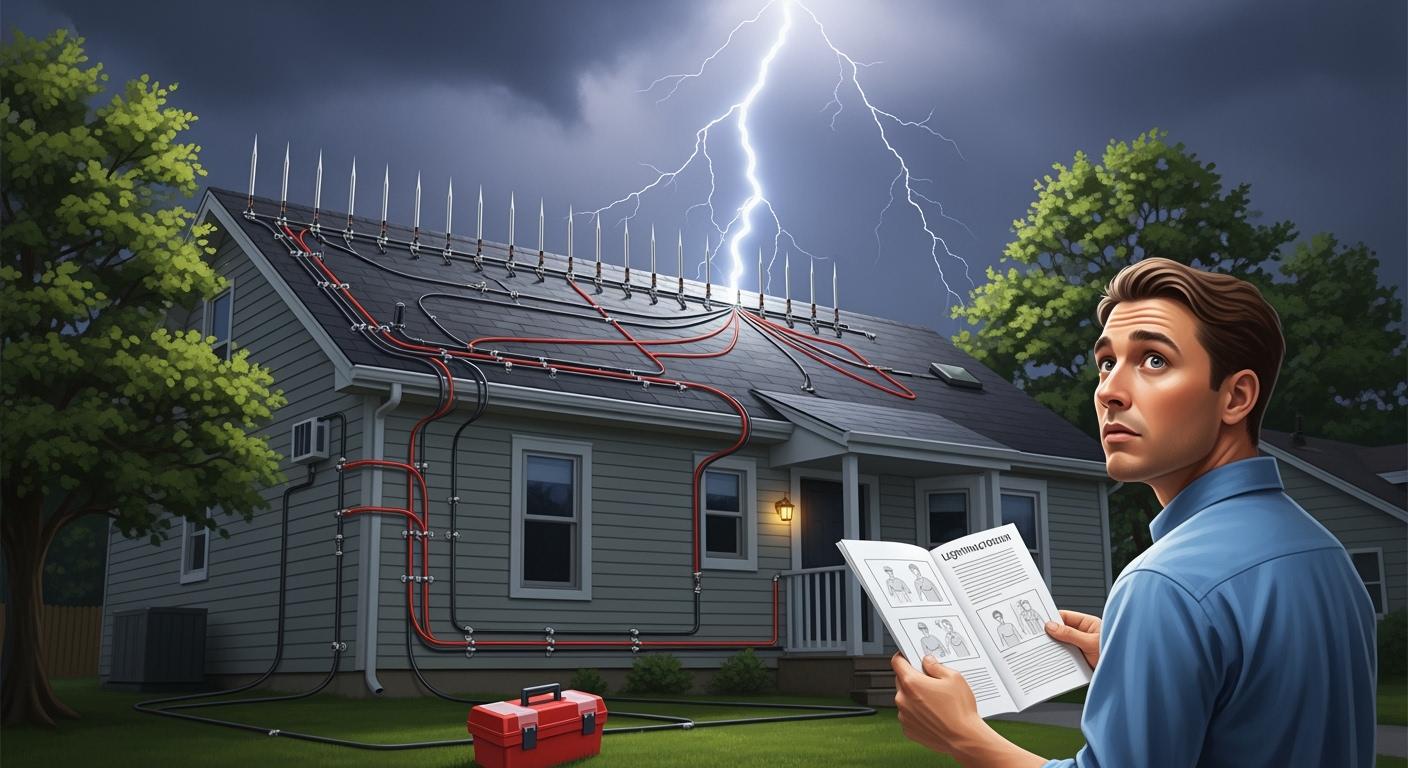
Air terminals, often called lightning rods, intercept lightning strikes and direct energy safely away from your home. You must focus on the strategic placement of air terminals for maximum protection. Industry standards recommend positioning lightning rods at the highest points of your roof and spacing them every 20 to 25 feet along ridges and perimeters. Place lightning rods at roof corners and near edges, keeping them within 24 inches of the ends.
Rounded tips on lightning rods improve effectiveness. Large homes may require extra lightning rods in the roof field to cover all vulnerable areas.
Conductors and Grounding
Conductors connect lightning rods to the grounding system. You should use copper or aluminum for conductors because these materials offer high conductivity and resist corrosion. Copper alloys like brass and bronze also work well. Stainless steel fittings prevent galvanic corrosion. The grounding system dissipates energy into the earth, reducing damage. Copper-clad ground rods are common, but you may need stainless steel in corrosive soils or solid copper in special conditions.
Soil type, such as sandy soil or bedrock, affects your choice of grounding materials.
Surge Protection Devices
Surge protection devices play a critical role in safeguarding your electronics. You need to ensure the incorporation of surge protection at all main entrances to your home’s electrical system. Surge protection devices sense overvoltage and redirect excess energy to the ground. They react quickly to voltage surges, protecting wiring and equipment from lightning strikes.
Proper installation of surge protection devices prevents costly damage to appliances and electrical systems.
Labeling and Maintenance Points
You should label each lightning rod, conductor, and grounding point for easy identification. Clear labeling helps during inspections and maintenance. Regular checks ensure all lightning rods and system parts remain secure and functional. Look for signs of corrosion, loose connections, or damage.
Routine maintenance keeps your lightning protection system reliable and ready for every storm.
Installation Procedures for Lightning Protection Systems
You have learned about the key parts of lightning protection systems. Now, you need to follow clear installation procedures to ensure your home receives the best protection. Each step builds on the last, so you must pay attention to detail and safety.
Planning and Blueprint Sketching
You start by planning the layout of your lightning protection system. Sketch a blueprint that shows where you will place air terminals, conductors, and grounding electrodes. Use tools like measuring tapes, pencils, and graph paper to create an accurate design. Your blueprint should include:
-
Placement of fasteners for secure attachment
-
Locations for conductor splicers and bonding points
You must connect all grounding systems in your home into a unified network. Equipotential bonding minimizes potential differences during a lightning strike. This reduces the risk of electrical breakdown between systems.
Your blueprint helps you visualize the entire lightning protection system and ensures you do not miss any critical areas.
Marking and Preparing Installation Points
You mark the installation points based on your blueprint. Use chalk or markers to outline where each air terminal, conductor, and grounding electrode will go. Make sure you follow the recommended spacing for air terminals—no more than 20 to 25 feet apart along ridges and roof perimeters.
Prepare the roof and walls by cleaning surfaces and checking for damage.
You must use proper attachment methods that maintain the integrity of the roof membrane.
If your roof has unique materials, consult the manufacturer’s guidelines before proceeding.
Installing Air Terminals Securely
You install air terminals at the highest points of your structure. They must extend at least 10 inches above the object they protect and sit as close as possible to roof edges. Use mounting techniques approved by the roofing manufacturer. Secure each terminal with corrosion-resistant fasteners.
Here is a table summarizing the main installation details:
|
Component |
Primary Specification |
Installation Detail |
|---|---|---|
|
Air Terminals |
Highest points |
Spaced for full roof coverage |
|
Cable Conductors |
Heavy-duty metal cables |
Direct, low-resistance routing |
|
Grounding Electrodes |
10-foot copper-clad steel rods |
Buried 8-10 feet deep at perimeter |
You must space air terminals at intervals not exceeding 25 feet. Proper attachment keeps your lightning protection system effective and prevents roof leaks.
Connecting Conductors to Grounding
You connect conductors to grounding electrodes using reliable grounding systems. Follow these steps for proper installation:
-
Dig a pit about 5×5 feet and 20-30 feet deep.
-
Bury a copper plate vertically in the pit.
-
Attach earth leads with nut bolts from two places on the plate.
-
Use two earth leads for each plate and secure tightly.
-
Apply grease around joints to prevent corrosion.
-
Collect all wires in a metallic pipe, keeping it 1 foot above ground.
-
Maintain moisture around the plate with powdered charcoal and lime.
-
Use thimble and nut bolts to connect wires to machine bed plates.
-
Connect the earth continuity conductor tightly to the earth lead.
-
Test the earthing system with an earth tester. Fill the pit with soil if resistance is acceptable.
You must ensure all conductors have direct, low-resistance paths to the ground. This step is crucial for the lightning protection system to work properly.
Labeling System Components
You label each component of your lightning protection system for easy identification. Use durable tags or markers that withstand weather and UV exposure. Follow recognized standards for labeling:
|
Standard Name |
Standard Title |
|---|---|
|
IEC 62305 |
Standard for lightning protection |
|
NFPA 780 |
Standard for the Installation of Lightning Protection Systems |
|
UL 96 |
Standard for Lightning Protection Components |
Label air terminals, conductors, and grounding points. Clear labeling helps during inspections and maintenance. You can quickly spot issues and ensure compliance with safety codes.
Tip: Keep a record of all labeled components. This makes routine checks and repairs easier.
You must follow these installation procedures to build an effective lightning protection system. Always prioritize safety and compliance. If you face challenges or uncertainty, seek help from a certified installer.
Proper installation of lightning rods and reliable grounding systems protects your home and family from lightning strikes.
Safety and Compliance in Lightning Protection
You have learned the steps for installing a lightning protection system. Now, you need to focus on safety and compliance. Following the right codes and avoiding mistakes keeps your home and family safe.
Meeting Codes and Standards
You must follow national and local codes when you install a lightning protection system. These codes help you make sure your system works as intended and meets legal requirements. Here is a table showing some important codes and standards:
|
Code/Standard |
Description |
|---|---|
|
NFPA 780 |
Provides standards for lightning protection systems and includes a risk assessment tool. |
|
UL Standards |
Establishes safety and performance criteria for lightning protection systems. |
|
LPI Standards |
Focuses on installation and maintenance of lightning protection systems. |
|
Florida Building Code |
Mandates installation of lightning protection systems in newly constructed schools, hospitals, and nursing homes. |
You should always check your local building codes before starting. Compliance with standards protects your investment and ensures your insurance remains valid.
When to Call a Professional
Some situations require expert help. If you face complex building structures or uncertain soil conditions, you should contact a certified installer. Professionals use advanced tools and methods to ensure safety.
The table below lists situations where you need immediate professional intervention:
|
Critical Inspection Components |
|---|
|
Thermal imaging scans of walls, ceilings, and structural elements |
|
Complete electrical system assessment |
|
Evaluation of conductive pathways (metal pipes, electrical conduits) |
|
Structural integrity verification |
|
HVAC system inspection |
You should never ignore signs of system failure or damage. When in doubt, call a professional to inspect and repair your lightning protection system.
FAQ
What is the lifespan of a lightning protection system?
You can expect a lightning protection system to last 20–30 years. Regular inspections and maintenance help extend its life. Replace corroded parts promptly.
Do I need surge protection if I have lightning rods?
Yes, you need surge protection devices. Lightning rods protect your structure, but surges can still damage electronics.
-
Install surge protectors at main electrical panels.
-
Protect sensitive devices like computers and TVs.
Can I install lightning protection on any roof type?
You can install lightning protection on most roof types, including metal, tile, and asphalt shingles.
|
Roof Type |
Installation Possible |
|---|---|
|
Metal |
Yes |
|
Tile |
Yes |
|
Asphalt Shingle |
Yes |
How often should I schedule professional inspections?
You should schedule professional inspections once a year. After severe storms, arrange an extra check.
Will lightning protection affect my home’s appearance?
Lightning protection systems use low-profile rods and cables. You can choose finishes that match your roof.
-
Most systems blend with your home’s design.
-
Placement minimizes visual impact.