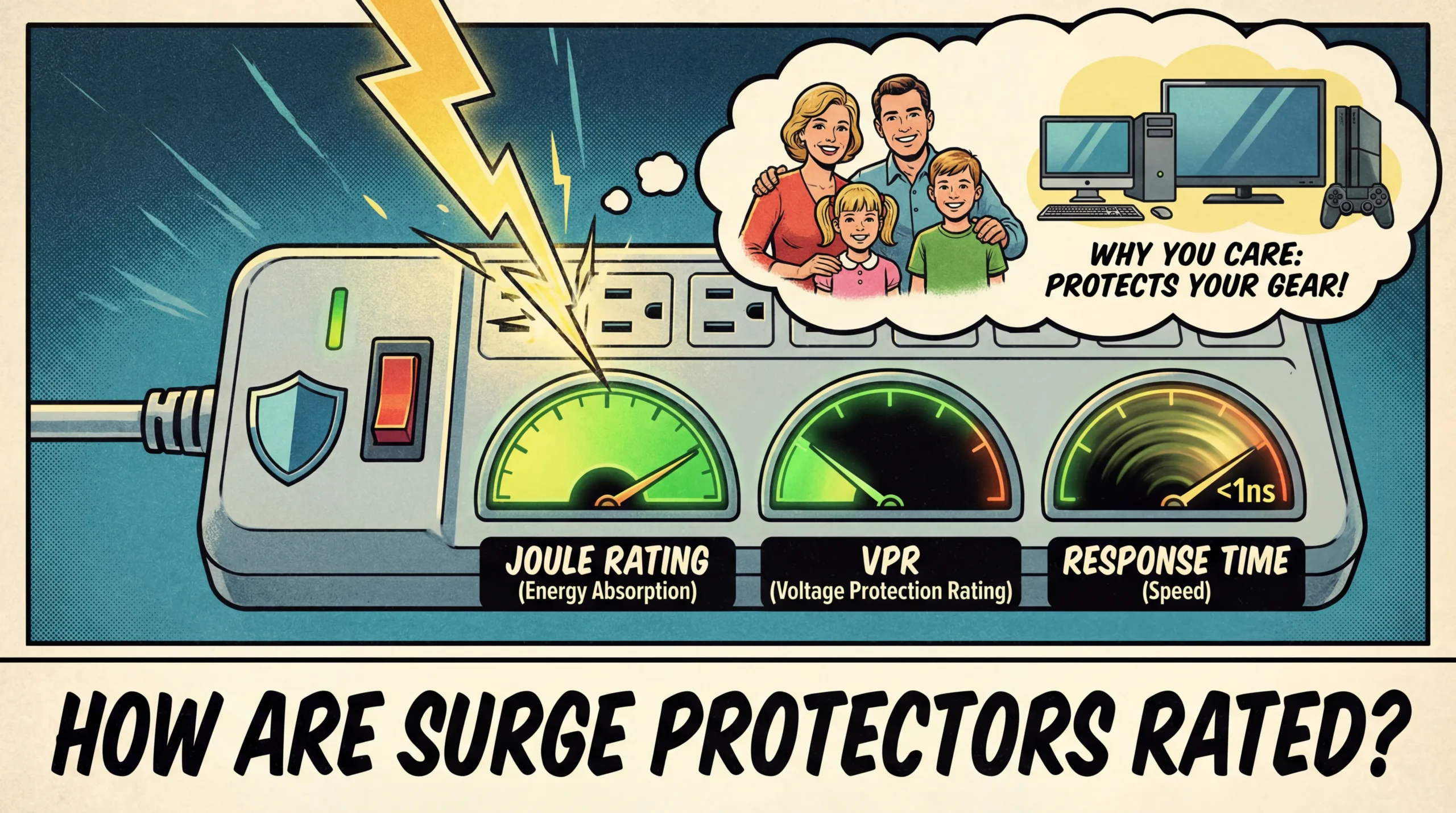
Wondering how are surge protectors rated? You’ll find the joule rating right on the box. This number shows how much energy your surge protector can absorb from electrical surges. A higher surge protection rating means better defense for your electronics. Knowing this helps you pick the right surge protector for your needs.
How Are Surge Protectors Rated
You already know that surge protectors keep your electronics safe, but you might wonder exactly how are surge protectors rated. Let’s break down the main factors that decide their effectiveness and help you make sense of the numbers and features you see on the packaging.
Joule Rating Explained
When you look at a surge protector, the joule rating stands out as the most important number. This rating tells you how much energy the device can absorb from power surges before it stops working. Here’s what you need to know:
-
A joule is a unit of energy, equal to one watt-second.
-
The joule rating shows the total surge energy a surge protector can handle over its lifetime.
-
Higher joule ratings mean the surge protector can absorb more energy and survive more surge events.
-
Devices with higher joule ratings last longer and offer better surge protection.
If you see a power strip joule rating of 600, it can absorb up to 600 joules before it needs replacement. A surge protector with a 2000 joule rating can handle much more, giving you extra peace of mind. You should always check the joule rating when deciding how are surge protectors rated for your needs.
Surge Protector Components
You might think a surge protector is just a fancy power strip, but it’s packed with components that make surge protection possible. Here’s a quick look at what’s inside:
|
Component |
Role in Surge Protection |
|---|---|
|
Metal Oxide Varistor (MOV) |
Absorbs excess energy during a surge, protecting devices from harm. |
|
Gas Discharge Tube (GDT) |
Creates a path for excess energy to flow safely to the ground during a surge. |
|
Transient Voltage Suppressor (TVS) |
Reacts instantly to voltage spikes, clamping excess energy to prevent damage to sensitive electronics. |
|
Grounding System |
Provides a path for excess voltage to flow harmlessly into the ground, preventing damage and electrical fires. |
|
Enclosure |
Protects internal components from external damage and ensures safe operation during surge events. |
The MOV is the star of the show. It changes resistance quickly when a surge hits, letting it absorb and redirect excess voltage. Under normal conditions, the MOV stays at high resistance, so your devices get clean power. When a spike happens, the MOV drops resistance and shields your electronics from harm.
This is how are surge protectors rated for their ability to handle power surges.
|
Characteristic |
Description |
|---|---|
|
Nonlinear Resistance |
MOVs adjust their resistance based on the applied voltage, providing effective clamping of spikes. |
|
Clamping Voltage |
They conduct excess current during voltage spikes, protecting connected devices from damage. |
|
High Resistance Under Normal Conditions |
MOVs maintain high resistance to prevent current flow, only decreasing resistance during spikes. |
|
Rapid Change in Resistance |
This allows MOVs to divert excess current away from sensitive components during transient events. |
|
Protection Against Transients |
MOVs shield devices from overvoltage conditions caused by events like lightning strikes. |
Amperes vs Joules
You might see both ampere and joule ratings on a surge protector box. These numbers measure different things, and knowing the difference helps you understand how are surge protectors rated.
-
The joule rating measures how much energy the surge protector can absorb before it fails.
-
The ampere rating shows how much current the surge protector can handle safely during normal operation and during a surge event.
A higher ampere rating means the surge protector can handle bigger surges and disconnect safely if there’s a fault. The ampere rating includes Surge Current Rating, Short Circuit Current Rating, and Nominal Discharge Current. These ratings help you know the surge protector’s performance and safety. If you want reliable surge protection, look for a power strip joule rating that matches your devices and an ampere rating that fits your environment. For example, a surge protector with a high joule rating and a strong ampere rating will protect your electronics during lightning storms and everyday surges.
Remember, even the best surge protector can’t stop a direct lightning strike, but it will block most power surges that happen in your home. Now you know how are surge protectors rated and what makes one better than another.
FAQ
What does the joule rating mean for surge protectors?
You see the joule rating on the package. It tells you how much energy your surge protector can absorb before it stops protecting your devices.
How are surge protectors rated for different devices?
You check the joule rating and features. Higher ratings protect sensitive electronics like computers. Lower ratings work for simple devices such as lamps or clocks.
What happens if my surge protector absorbs a big surge?
You need to replace it. After a large surge, the joule rating drops, and your surge protector cannot shield your electronics from future surges.