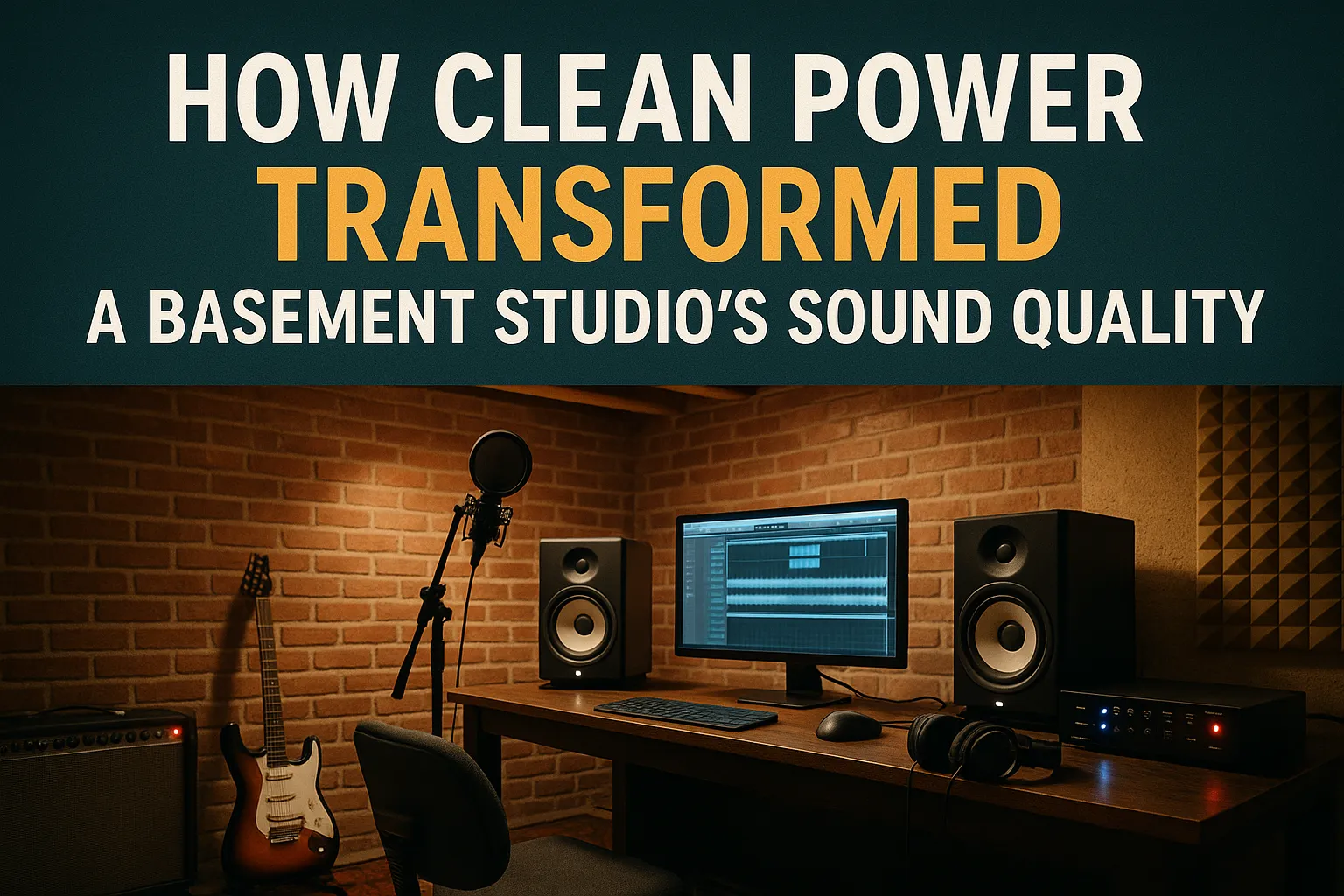
Tom poured his heart and wallet into his basement studio, equipping it with top-notch mics and interfaces. But despite the investment, he struggled with frustrating noise and recordings that just weren’t up to par. After endless troubleshooting, from the cables to the software, he finally discovered the culprit: household electrical problems were ruining every session. After he used power conditioning, his studio produced the professional sound quality his gear always should have. 💪🏼
He’d finally overcome years of issues, unlocking the true potential of his creative haven.
The Dream Space That Became a Nightmare
Home studios have revolutionized audio production, making it accessible to everyone. Musicians, podcasters, and content creators are transforming their basements into creative havens. These spaces offer the allure of escaping costly studio rentals and the freedom to pursue projects whenever inspiration hits. The basement’s inherent isolation from household noise makes it a prime location for both serious hobbyists and professionals working from home.
However, this environment, often far from the main electrical panel and sharing circuits with demanding appliances, presents unforeseen challenges that many creators don’t encounter until they’re immersed in their work.
When Quality Equipment Doesn’t Deliver Quality Sound
Imagine spending hours researching the perfect audio interface, investing in studio monitors that reviewers rave about, and carefully arranging acoustic treatment throughout your recording space. You follow every tutorial, replicate the signal chain of professionals you admire, and yet something remains fundamentally wrong. A persistent hum haunts your recordings, forcing you to apply noise reduction in post-production that dulls the clarity you worked so hard to capture.
Random pops and clicks appear in otherwise clean takes, sometimes ruining perfect vocal performances. Your studio monitors emit a buzz that varies in intensity throughout the day, making it impossible to trust your mixing decisions. The frustration compounds when you realize these issues don’t occur consistently, making troubleshooting feel like chasing ghosts.
This scenario reflects a common reality for home studio operators who unknowingly battle power quality issues. Residential buildings’ electrical infrastructure was designed for basic household needs, not the demands of sensitive audio equipment. Sensitive audio equipment amplifies even microscopic voltage fluctuations into audible noise. Basements present particular challenges because they typically sit at the end of long electrical runs from the main panel, increasing resistance and voltage drop. They often share circuits with major appliances like washing machines, refrigerators, and HVAC systems that create electrical noise every time they cycle on or off.
The grounding systems in older homes may be inadequate or improperly configured, creating ground loops that manifest as the dreaded sixty-cycle hum through studio monitors. Many creators exhaust themselves replacing cables, updating drivers, repositioning equipment, and questioning their own technical competence, never realizing the fundamental issue exists in the wall outlets powering their gear.
The Power Quality Revelation
Understanding the true nature of electrical power transforms how we approach studio setup. Most people conceptualize electricity as simply present or absent, like a light switch that’s either on or off. The reality involves complex waveforms that should maintain consistent voltage, frequency, and clean sine wave patterns. Residential power quality varies dramatically based on factors including distance from transformers, neighborhood electrical load, weather conditions affecting power lines, and the behavior of other devices in your home.
When the washing machine starts its spin cycle, it creates a brief voltage sag that your lights might not reveal but your audio preamp certainly registers. When the furnace kicks on, it introduces electrical noise that propagates through your home’s wiring. These power anomalies don’t just create audible problems; they stress electronic components, potentially shortening the lifespan of expensive equipment investments.
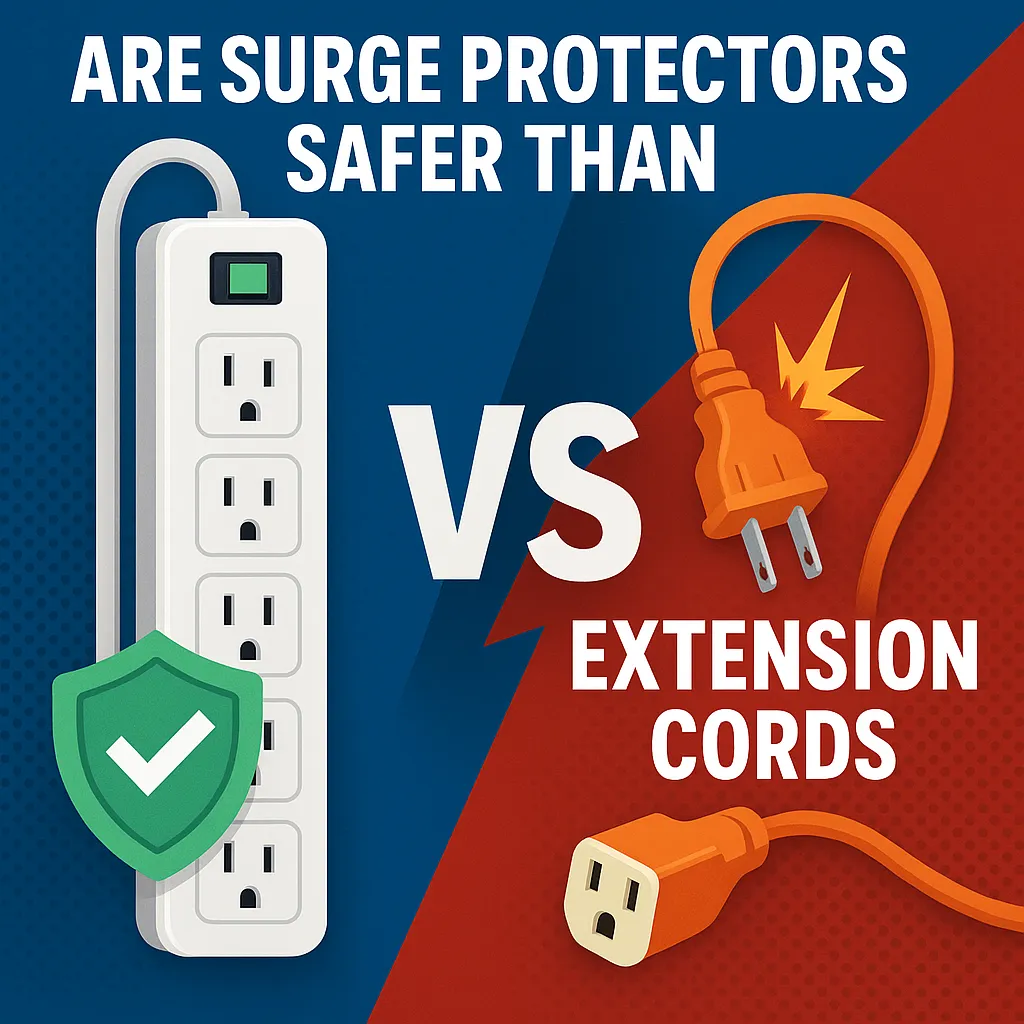
The distinction between basic surge protection and true power conditioning represents a critical knowledge gap for most home studio operators. Standard surge protectors offer a single function: sacrificial protection against voltage spikes that exceed a threshold, typically around one hundred fifty volts above normal. They provide essential protection against lightning strikes and major power events, but they do nothing to address the constant quality issues affecting audio work.
Power conditioners, in contrast, actively regulate voltage to maintain consistency, filter out electromagnetic and radio frequency interference, and provide proper grounding. Advanced solutions incorporate battery backup systems that not only provide protection against outages but constantly condition power by converting incoming AC to DC, then generating perfectly clean AC output. This complete regeneration of power eliminates all the noise and irregularities introduced by utility companies, neighborhood electrical loads, and household appliances.
For basement studios sharing circuits with many other devices, this transformation from dirty household power to clean, regulated electricity fundamentally changes what’s possible in terms of audio quality and equipment reliability.
The Sound of Silence: When Problems Simply Disappear
The transformation that proper power conditioning delivers often surprises even those who understand the theory. The persistent background hum that required constant noise reduction processing simply vanishes, revealing the true noise floor of your equipment. Recordings capture subtle details and ambience that were previously masked by electrical interference, delivering the clarity that justifies your equipment investments. The random pops and clicks that interrupted takes and required extensive editing disappear completely, streamlining your workflow and reducing post-production time.
Studio monitors reveal accurate frequency response without the electrical buzz that compromised mixing decisions, allowing you to trust what you hear. Beyond the immediate audio improvements, equipment operates more reliably with fewer mysterious glitches, crashes, or performance inconsistencies.
The psychological benefits mirror the technical ones. Knowing your monitoring setup accurately reflects your work builds confidence, replacing any lingering doubt. Creative flow flourishes when technical issues vanish, freeing you to focus on artistic choices instead of troubleshooting. You’re no longer haunted by the idea that your gear was inadequate – the relief of knowing it performed as intended is immense.
Time previously wasted editing out noise or researching electrical gremlins is now channeled directly into the creative process. The professional quality that felt unattainable is finally within reach, not by buying new equipment, but by maximizing the performance of what you already have.
Perhaps most significantly, the long-term equipment protection provided by proper power conditioning preserves the substantial investment represented by studio gear, preventing premature component failure caused by voltage fluctuations and electrical stress.
Building on a Clean Foundation
Fixing power quality problems makes the studio a dependable tool for creative expression, not a source of technical frustration. Expansion becomes possible with the confidence that additional equipment will integrate seamlessly into a clean electrical environment. The knowledge gained about power quality influences future decisions about equipment placement, circuit planning, and infrastructure improvements.
Many discover that solving their studio power issues benefits other sensitive electronics throughout their home, from computers to home theater systems.
The basement studio transforms from a space of compromise into a genuine professional environment where the only limitations are creativity and skill, not electrical infrastructure. This foundation supports growing ambitions, whether that means taking on client work, expanding into video production, or simply pursuing creative projects with the confidence that technical execution will match artistic vision.
Essential Principles for Studio Power Quality
Home recording environments face unique electrical challenges that compromise audio quality and equipment reliability. Symptoms of power quality issues include persistent hum and buzz, random noise artifacts in recordings, inconsistent equipment performance, and unexplained technical problems that don’t respond to typical troubleshooting. Basement studios are particularly vulnerable due to their distance from electrical panels, shared circuits with major appliances, and potential grounding issues in older residential wiring.
Basic surge protection, while necessary, addresses only catastrophic power events and provides no benefit for the constant quality issues affecting audio work.
True power conditioning actively regulates voltage, filters interference, and provides proper grounding to eliminate electrical noise at its source. Advanced solutions with battery backup not only protect against outages but regenerate completely clean power by converting and reconverting electrical current. The investment in power quality pays dividends through improved audio clarity, reduced post-production time, more reliable equipment operation, and protection of expensive studio gear from electrical stress.
Understanding power quality transforms frustrating technical mysteries into solvable problems with clear solutions, allowing creative professionals and serious hobbyists to achieve the results their equipment and skills make possible.