You might wonder, are surge protectors waterproof? Most aren’t, unless they have special ratings that keep water out. Standard models work well inside, but waterproof surge protectors give you extra safety where moisture or rain might be a problem. You get better weather protection for your electronics and peace of mind when you use the right type in risky environments.
Are Surge Protectors Waterproof
You might ask yourself, are surge protectors waterproof? This question matters if you plan to use one outside or in a place where water could be a problem. Most surge protectors you find in stores are not waterproof. They work best indoors, away from rain, splashes, or high humidity.
If you need protection in wet places, you should look for a special type.
Standard vs. Waterproof Surge Protector
A standard surge protector keeps your electronics safe from power spikes, but it does not stop water from getting inside. Water can damage the inside parts and make the device unsafe. When you see a waterproof surge protector, you know it is built to handle wet conditions. These models have sealed outlets, tough covers, and special designs that keep water out.
You can check the packaging or product details to see if a surge protector is waterproof. Look for ratings or certifications that prove it can handle water. This step helps you avoid surprises when you use it outside or in damp areas.
Risks of Using Non-Waterproof Models
If you use a regular surge protector in a wet spot, you take a big risk. Water can get inside and cause short circuits, shocks, or even fires. You might think, are surge protectors waterproof enough for outdoor use? The answer is no, unless the label says so. Always choose the right surge protector for your space. Using the wrong one can put your safety and your electronics at risk.
Surge protectors are not universally waterproof for every situation; therefore, it’s essential to match the surge protector to its intended environment.
When exposed to rain, splashes, or high humidity, always opt for a waterproof surge protector.
What Makes Surge Protectors Waterproof
You want to know what sets a waterproof surge protector apart from a regular one. This section will help you spot the differences and understand why these features matter. If you plan to use a surge protector outside or in damp places, you need to look for special signs that show it is truly waterproof.
IP Ratings and Weather Protection
When you shop for a waterproof surge protector, you will see something called an IP rating. This rating tells you how well the device can block out water and dust. The letters “IP” stand for “Ingress Protection.” You will see numbers after the letters, like IP44 or IP67. The first number shows how well the device keeps out solid things like dust. The second number shows how well it keeps out water.
A waterproof surge protector with a high IP rating can handle rain, splashes, and even strong jets of water. You do not have to worry about sudden weather changes or spills. This rating gives you peace of mind when you use electronics outside.
Key Features of Waterproof Models
You will notice some clear signs when you look at a waterproof surge protector. These features help keep water out and protect your devices.
-
Sealed outlets: Each outlet has a cover or flap that closes tightly.
-
Heavy-duty casing: The body uses strong plastic or rubber to stop water from getting inside.
-
Gasket seals: Rubber rings around the edges keep water from leaking in.
-
Rust-resistant parts: Screws and metal pieces do not rust, even if they get wet.
-
Secure cable entry: The cord enters through a tight seal, so water cannot sneak in.
A waterproof surge protector often has bright labels or markings to show it is safe for wet areas. You can check the packaging or the device itself for these signs. If you see these features, you know you have a waterproof model that can handle tough conditions.
You now know what makes a surge protector waterproof. These details help you pick the right one for your needs, so your electronics stay safe no matter where you use them.
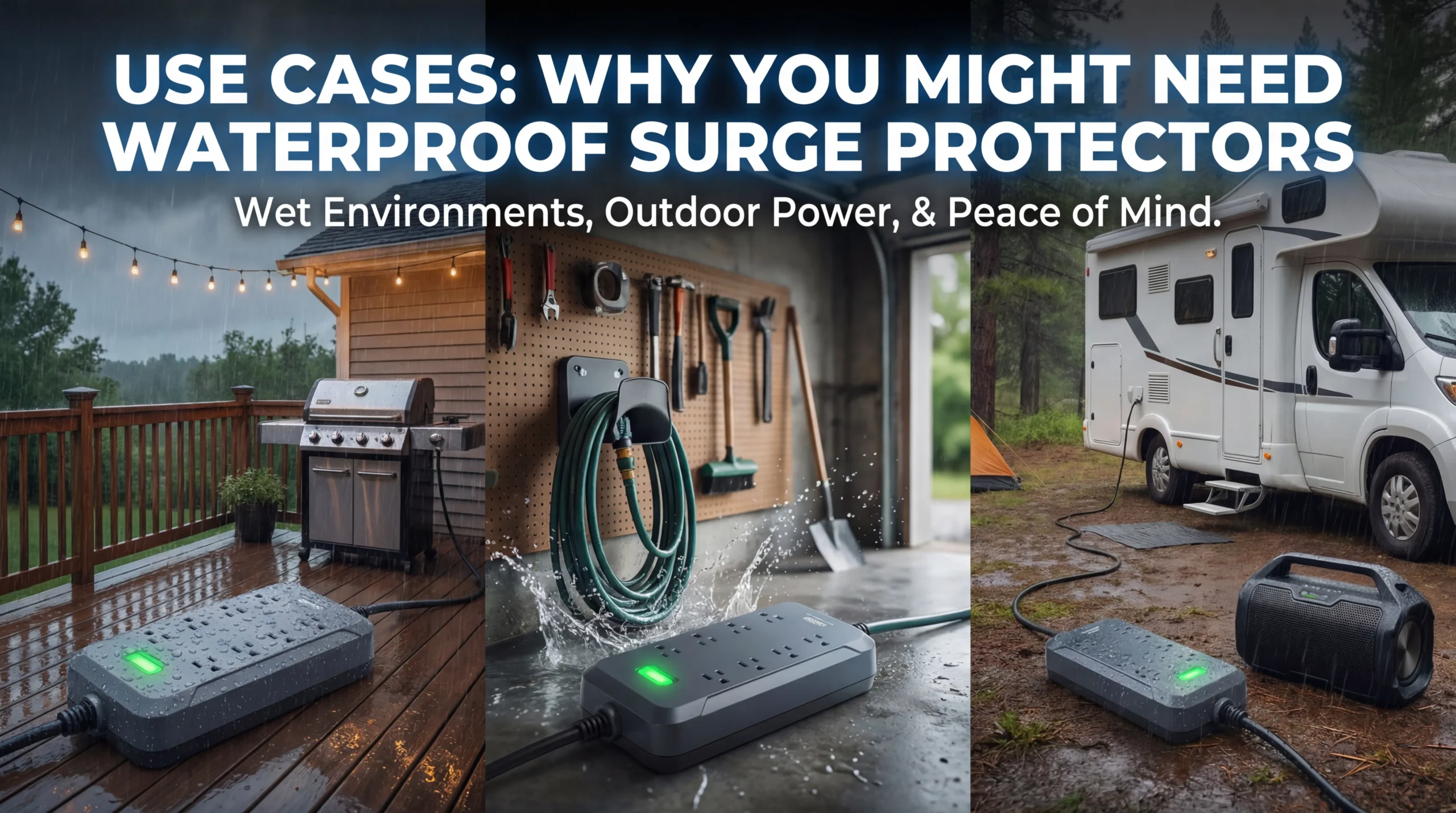
5 Use Cases for Waterproof Surge Protectors
You see surge protectors everywhere, but you might not realize how important a waterproof cover can be in certain places. When you face rain, water, or weather exposure, you need more than just basic surge protection. Let’s look at what situations call for the best surge protectors with a waterproof cover for the connection and why you should never skip that extra layer of safety.
Outdoor Events and Installations
Outdoor events bring excitement, but they also bring rain and unpredictable weather. You set up lights, speakers, and food stands. Suddenly, a storm rolls in. If you use a regular surge protector, water can sneak in and cause trouble. A waterproof cover for the connection keeps every outlet safe, even if rain pours down.
Here’s what you need to watch out for at outdoor events:
-
Rain can flood extension cords and outlets.
-
Water exposure can lead to short circuits or fires.
-
Rust and corrosion can damage plugs and sockets.
-
Without a waterproof cover, you risk electric shock.
You want the best surge protectors with a tough waterproof cover for the connections. These models keep rain out and protect your gear, so your event goes on without a hitch.
Construction Sites
Construction sites never stop, even when rain falls. You see power tools, lights, and chargers everywhere. Water and dust fill the air. A waterproof surge protector with a strong waterproof cover for the connection stands up to these harsh conditions.
You need a surge protector that can handle:
-
Heavy rain and mud.
-
Water splashes from cleaning or concrete work.
-
Dust and debris that clog outlets.
A waterproof cover for the connection keeps every plug safe. The best surge protectors for construction sites use a waterproof cover that seals tightly, blocking water and dust. You avoid downtime and keep your team safe. Surge protection with a waterproof cover for the connection means you don’t worry about rain or water ruining your tools.
Marine and Boating
Boats and marinas face constant rain, splashes, and saltwater. You need a surge protector with a waterproof cover for the connection, not just for convenience but for safety. The U.S. Coast Guard warns that regular surge protectors can overheat and cause fires on boats. They found that many surge protectors failed to interrupt both live wires, which led to dangerous situations.
If you use surge protectors with a waterproof cover for the connection, you get:
|
Feature |
Description |
|---|---|
|
First Line of Defense |
Protects sensitive onboard marine electronics from surges. |
|
Hybrid Design |
Mitigates electrical surges and filters out ringing transients. |
|
Certification |
ISO 9001 Certified Manufacturing Facility. |
|
Surge Current Rating |
Robust 2 kA per mode Peak Surge Current Rating. |
|
Voltage Responsive Circuitry |
Protects electrical systems from impulse surges. |
|
Frequency Responsive Circuitry |
Filters out ringing transients that can damage electronics. |
|
Watertight Seal |
All models are encapsulated for superior watertight seal and vibration resistance. |
|
Compact Size |
Can be installed virtually anywhere on the boat’s electrical system. |
A waterproof cover for the connection and a rain seal keep water out, even during storms. You protect your electronics and avoid costly repairs. The best surge protectors for boats always include a waterproof cover for the connection, so you never worry about rain or water exposure.
Industrial Environments
Factories and warehouses use heavy machines and lots of power. Rain, water, and dust can sneak into outlets and cause problems. You need a surge protector with a waterproof cover for the connection to keep everything running smoothly.
You see forklifts, conveyor belts, and computers. If rain or water gets inside a surge protector, you risk downtime and damage. The best surge protectors for industrial use have a waterproof cover for the connection that seals out water and dust. You keep your machines safe and your team working. A waterproof cover for the connection also helps with regular cleaning. You can wash floors or equipment without worrying about water getting into the surge protector.
Surge protection with a waterproof cover for the connection means you stay safe, even in tough conditions.
Home Wet Areas
Bathrooms, kitchens, and laundry rooms all have water and electricity close together. You know that water and electricity never mix. Outlets near sinks, tubs, or washing machines can get wet from rain, spills, or steam. A waterproof surge protector with a waterproof cover for the connection keeps your family safe.
Common hazards in home wet areas include:
-
Water entering sockets and causing electric shocks.
-
Damaged insulation from moisture, exposing wires.
-
Outlets near water, especially in older homes, not following modern codes.
-
Appliances not grounded or too close to water.
-
Lack of GFCI outlets, which cut power if they sense danger.
You want surge protection that stands up to water, rain, and spills. The best surge protectors with a waterproof cover for the connection give you peace of mind, even in the wettest spots at home. You now know what situations call for a waterproof surge protector. Waterproof surge protectors with connection covers offer protection against rain, boat water, and kitchen spills.
Always look for a waterproof cover, a rain seal, and surge protection that matches your environment.
Choosing a Waterproof Surge Protector
You know now where a waterproof surge protector matters most. The next step is picking the right one for your needs. Not every surge protector with a waterproof label gives you the same level of safety. You want to make sure you get the best protection and a cover that stands up to your environment.
Essential Features to Look For
When you shop for a waterproof surge protector, check for these must-have features. The table below shows what to look for and why each feature matters:
|
Feature |
Description |
|---|---|
|
Weatherproof and Waterproof |
Keeps rain and moisture out, so your equipment stays safe from power surges caused by weather. |
|
Higher Joule Rating |
Handles more energy, giving you better protection against strong surges. |
|
Greater Protection for Equipment |
Designed for outdoor gear that faces the elements every day. |
|
Increased Durability |
Built tough to last longer in harsh conditions. |
You also want to look for a surge protector with a sturdy cover that seals tightly. A lower clamping voltage means the surge protector reacts fast to spikes. Some models add extra features like indicator lights, USB ports, or built-in circuit breakers. These features help you spot problems and keep your devices safe.
Matching to Your Environment
You need to match your surge protector and cover to the place you plan to use them. Think about the weather, the amount of water, and the type of equipment you want to protect. For outdoor use, pick a surge protector with a high IP rating and a strong cover that blocks out rain and dust. In a kitchen or bathroom, choose a model with a cover that fits tight and resists steam or splashes.
Common mistakes include picking a surge protector that is too big or too small, ignoring the joule rating, or forgetting about response time. Some people forget to check if the cover fits all their plugs. Others use a surge protector without proper grounding, which can make the cover useless.
Read the product label and look for safety certifications.
Make sure the surge protector and cover match your environment and your needs. If you do, you get the best protection for your devices and peace of mind every day.
You now see why weather protection matters for surge protectors. Most surge protectors are not waterproof, so you need to check for special ratings before using them in wet places. Waterproof models help you avoid damage from storms, lightning, and power surges.
-
Lightning and grid faults can harm your home systems.
-
Surge protectors block extra energy and keep your electronics safe.
-
In storm-prone areas, waterproof surge protection gives you peace of mind.
Take a moment to think about your space and pick the right surge protector for your needs.
FAQ
What does an IP rating mean for waterproof surge protectors?
An IP rating shows how well a device blocks water and dust. Higher numbers mean better protection. You should always check the IP rating before using a surge protector outdoors or in wet places.
What happens if water gets inside a surge protector?
If water gets inside, you risk electric shock, short circuits, or even fire. You should stop using it right away and replace it with a waterproof model for safety.
What is the difference between weatherproof and waterproof?
Weatherproof means the device can handle rain or splashes. Waterproof means it can block water even if it gets soaked. You want waterproof for the wettest spots.
What should you do if your surge protector gets wet?
Unplug it right away. Do not use it again. Water can damage the inside and make it unsafe. Replace it with a new surge protector designed for wet areas.