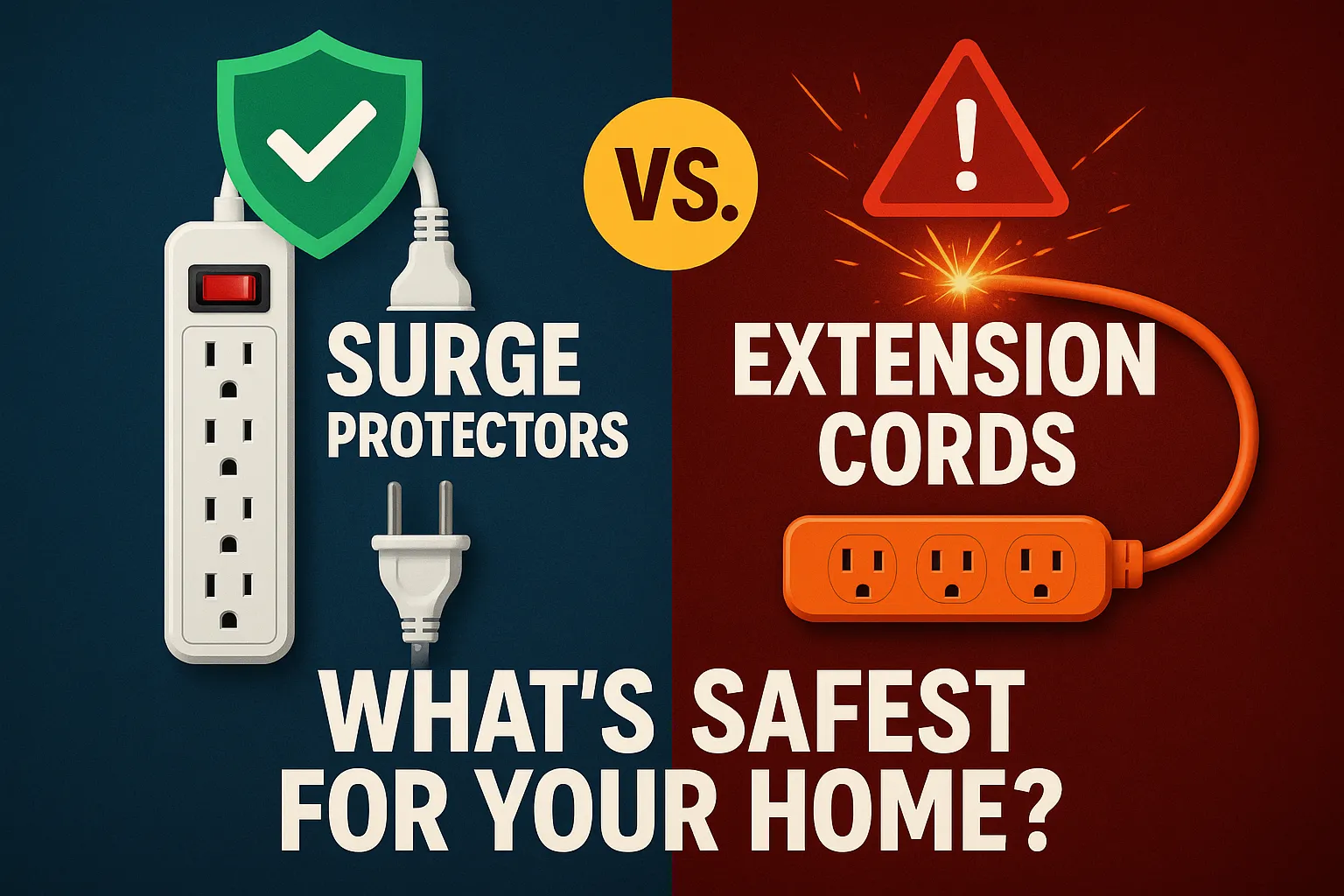
The visual similarities between surge protectors and extension cords can be deceiving. Despite their similar appearances, these two electrical accessories have distinct functions. Recognizing these differences is vital for home safety and the protection of your electronic devices.
Understanding the Basics: What Sets Them Apart
Extension cords, at their core, are designed for a simple purpose: extending the reach of your power outlets. They’re essentially portable power cables with a plug on one end and one or more outlets on the other. Think of them as electrical highways—they transport electricity from point A to point B without altering the current in any way.
Surge protectors, on the other hand, incorporate protective technology that shields your connected devices from sudden electrical surges or spikes. Imagine them as electrical bodyguards that stand between your valuable electronics and potentially harmful power fluctuations.
The Hidden Dangers of Extension Cords
While extension cords serve a practical purpose, they come with inherent risks that many homeowners overlook:
Capacity Limitations
Every extension cord has a maximum current-carrying capacity. When this capacity is exceeded—perhaps by plugging in too many high-powered devices—the cord can overheat, potentially leading to melted insulation or even electrical fires. This risk is particularly pronounced with lightweight or inexpensive cords, which often have lower capacity ratings.
Tripping Hazards
The convenience of extension cords comes with a physical hazard—their tendency to create tripping risks when stretched across floors or walkways. Unlike surge protectors, which typically remain stationary near wall outlets, extension cords often traverse longer distances, increasing the likelihood of accidents.
Inappropriate Usage Scenarios
Extension cords face common misuses that compromise safety. Picture this scenario: an extension cord running under a carpet where heat can’t dissipate properly, or one left outdoors exposed to moisture despite lacking weatherproof ratings. These situations create hazards that users might not immediately recognize.
The Protective Benefits of Surge Protectors
Surge protectors offer several advantages over standard extension cords:
Electrical Surge Protection
The primary benefit of surge protectors lies in their name—they protect against power surges. When lightning strikes nearby or when electrical equipment cycling on and off creates power fluctuations, surge protectors absorb excess voltage rather than passing it to connected devices. This protection can prevent the premature failure of expensive electronics like computers, televisions, and gaming systems.
Circuit Breakers and Safety Features
Many quality surge protectors include built-in circuit breakers that automatically cut power when overloading occurs. This feature provides an additional layer of safety beyond what standard extension cords offer. Imagine a scenario where too much current flows through the circuit—while an extension cord might overheat, a surge protector with a circuit breaker would simply shut off, preventing potential hazards.
Organized Power Distribution
The design of surge protectors typically allows for multiple devices to be plugged in at a centralized location, reducing the temptation to create “daisy chains” of extension cords—a practice that can increase fire risks substantially.
When Each Option Makes Sense
Understanding when to use each tool is essential for maintaining electrical safety:
Appropriate Uses for Extension Cords
Extension cords shine in temporary, low-demand situations. They’re ideal when you need to use a device far from an outlet for a short period, such as operating garden tools, temporary lighting, or occasional use of appliances in locations without convenient outlets.
Ideal Applications for Surge Protectors
Surge protectors become the safer choice in several circumstances:
-
When protecting valuable electronics like computers, entertainment systems, or gaming consoles
-
In areas where multiple devices need power in close proximity
-
In regions prone to electrical storms or on electrical grids with frequent fluctuations
-
For semi-permanent power solutions where cords will remain in place for extended periods
Recognizing Quality: Not All Products Are Created Equal
The safety advantage of surge protectors over extension cords depends greatly on product quality:
Extension Cord Quality Indicators
When an extension cord is necessary, look for:
-
Appropriate gauge (thickness) for intended use—thicker wires (lower gauge numbers) handle more current
-
UL (Underwriters Laboratories) or other recognized testing agency certification
-
Intact insulation without cracks or exposed wires
-
Three-prong plugs that include a ground connection
-
Weather-resistance ratings if used outdoors
Surge Protector Quality Markers
For surge protectors, quality considerations include:
-
Joule rating (higher numbers indicate greater surge absorption capacity)
-
Response time (how quickly it reacts to surges)
-
UL 1449 certification
-
Indicator lights that show when protection is active
-
Warranty coverage for connected equipment
Common Misconceptions and Safety Myths
Several misconceptions cloud the public understanding of electrical safety:
The “Any Surge Protector is Better Than Any Extension Cord” Fallacy
While surge protectors generally offer more safety features, a low-quality surge protector may provide a false sense of security. A cheaply made surge protector with minimal joule ratings might offer little actual protection against serious power surges. Conversely, a high-quality, appropriately rated extension cord used correctly can be perfectly safe for its intended purpose.
The “Power Strip Equals Surge Protector” Confusion
Many people incorrectly assume all power strips include surge protection. This dangerous misconception can lead to plugging sensitive electronics into devices that offer no protection whatsoever against power fluctuations. Always verify that a product specifically states it provides surge protection before relying on it to safeguard valuable equipment.
Best Practices for Electrical Safety
Regardless of which option you choose, certain principles enhance safety:
Load Management
Avoid overloading either extension cords or surge protectors. Even the best surge protector can become a hazard if its maximum capacity is exceeded. Imagine each outlet as having a limited amount of electrical “bandwidth”—when too many devices draw power simultaneously, that bandwidth gets overwhelmed.
Regular Inspection
Both extension cords and surge protectors should be regularly examined for signs of wear, damage, or overheating. Look for discoloration around outlets, melted plastic, or unusual odors—these can indicate dangerous conditions requiring immediate attention.
Replacement Schedules
Surge protectors have a limited lifespan. Unlike extension cords, which typically function until physically damaged, surge protectors gradually lose their protective capacity with each surge they absorb. Many experts suggest replacing surge protectors every 3-5 years, or sooner if they’ve absorbed significant surges.
The Environmental and Economic Perspective
Beyond immediate safety concerns, there’s another dimension to consider:
Device Protection Economics
While surge protectors typically cost more than basic extension cords, they can prove economical over time by preventing damage to expensive electronics. Consider the potential cost of replacing a computer, television, or other high-value device damaged by electrical surges versus the modest investment in quality protection.
Energy Efficiency Considerations
Some advanced surge protectors include energy-saving features like automatic shutoff for idle devices or power scheduling capabilities. These features not only enhance convenience but can reduce the “phantom power” consumption of devices in standby mode, potentially lowering electricity bills over time.
Making the Safest Choice for Your Needs
When deciding between extension cords and surge protectors, consider several factors:
-
The value and sensitivity of equipment being powered
-
The duration of use (temporary vs. semi-permanent)
-
Local electrical grid reliability
-
The specific power requirements of connected devices
-
Environmental factors like moisture exposure or temperature extremes
In most cases involving electronic devices of significant value or in situations where power will be needed for extended periods, surge protectors represent the safer choice. For truly temporary, light-duty applications where convenience is paramount, properly rated extension cords used according to manufacturer guidelines can be appropriate.
The difference between these two common household items might seem subtle at first glance, but understanding their distinct purposes and limitations represents an important step toward creating a safer home environment. By choosing the right tool for each situation and using it correctly, you can minimize electrical risks while maximizing convenience.