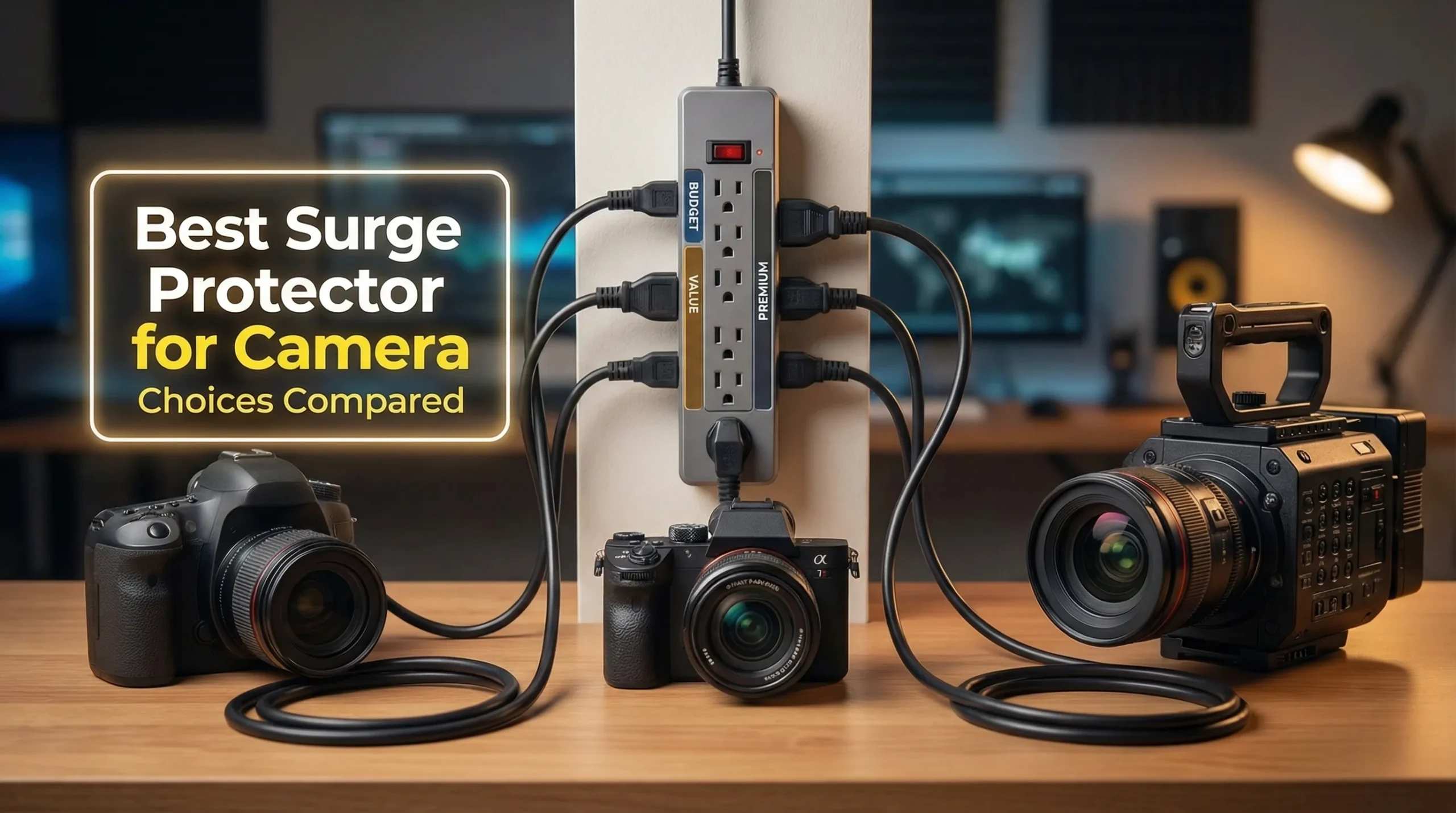
You want your cameras to last, right? Choosing the best surge protector for camera can save you from expensive repairs.
Take a look at these top picks:
-
Ubiquiti ETH-SP-G2 – Best overall for both IP and CCTV setup
-
Tupavco TP302 – Ideal for coaxial CCTV systems
-
Ditek DTK-POE – Top choice for PoE cameras
-
Axis T8061 – Great value for tight budgets
Did you know that 80% of outdoor camera failures happen because of electrical surges or lightning strikes? These products tackle protection, compatibility, installation, reliability, and value. Check out the table below to see how different types stack up for your system.
Ready to compare specs and features?
Let’s jump in.
Surge Protector for Camera: Quick Comparison
Specs and Features Table
You want to make the right choice fast, right? This table gives you a side-by-side look at the top surge protectors for cameras. You can spot the differences in protection, compatibility, and special features at a glance.
|
Model |
Type/Class |
Joule Rating |
Clamping Voltage |
Camera Compatibility |
Key Features |
Installation |
Warranty |
|---|---|---|---|---|---|---|---|
|
Ubiquiti ETH-SP-G2 |
Type 2/Class II |
1500 |
10V |
IP, PoE, CCTV |
Fast response, weatherproof, PoE safe |
Inline/Outdoor |
1 year |
|
APC P11VT3 |
Type 3/Class III |
2880 |
400V |
Multiple devices |
11 outlets, phone/Coax protection |
Power strip/Indoor |
Lifetime |
|
Tupavco TP302 |
Type 2/Class II |
1000 |
<35V |
Analog, HD CCTV |
BNC connectors, low insertion loss |
Inline/Outdoor |
2 years |
|
Ditek DTK-POE |
Type 3/Class III |
1200 |
60V |
PoE (802.3af/at/bt) |
PoE compatible, fast response |
Inline/Indoor/Outdoor |
10 years |
|
Axis T8061 |
Type 3/Class III |
600 |
60V |
IP, PoE |
Compact, easy install, budget-friendly |
Inline/Indoor |
3 years |
💡 Tip: Higher joule ratings mean your surge protector for camera can handle more surges before wearing out. Lower clamping voltages give your sensitive electronics better protection.
When you compare surge protectors, keep these points in mind:
-
Grounding quality matters. A good earth ground boosts protection.
-
Joule rating shows how much energy the device can absorb.
-
Response time should be fast—look for sub-nanosecond specs.
-
Compatibility with your camera type (PoE, analog, IP) is key.
-
Warranty gives you peace of mind if something goes wrong.
This quick comparison helps you zero in on the best surge protector for camera setups, whether you need outdoor durability, multi-device coverage, or just solid value.
Types of Surge Protectors for Cameras
You might wonder which surge protector fits your camera setup. Let’s break down the main types and where you’ll use them.
Type 1 Surge Protectors
Type 1 surge protectors sit at the main electrical panel or entry point. You install them outdoors, right where power enters your property. These protectors handle big surges from lightning strikes. If you have outdoor CCTV cameras, you want weatherproof models rated at least IP66 or NEMA 4X. Place them close to entry points to stop surges before they spread.
Type 2 Surge Protectors
Type 2 protectors go inside, usually at sub-panels or near your camera system. They use fast clamping devices like TVS diodes. These devices react quickly and keep voltage below safe levels. You’ll see them in setups with high-power devices. Type 2 surge protectors for cameras divert excess voltage, keep your equipment running, and act as a barrier for stable power.
-
They shield against electrical spikes.
-
They send extra voltage safely to ground.
-
They prevent damage from sudden surges.
Type 3 Surge Protectors
Type 3 protectors install right next to your cameras or sensitive electronics. You get high surge current handling (up to 20kA+), durable metal housings, and great heat dissipation. These work indoors and outdoors, but they’re bulkier and cost more. Sometimes, you need to upgrade grounding for these protectors. They’re perfect for multi-stage setups.
|
Advantages |
Limitations |
|---|---|
|
Handles huge surges |
Bulky, heavy |
|
Durable metal housing |
Higher price |
|
Works in harsh conditions |
May need grounding upgrades |
Inline Surge Protectors
Inline surge protectors connect directly in the cable line. You use them for outdoor cameras, areas with frequent lightning, or places with power grid fluctuations. They’re highly effective at keeping your CCTV system safe and minimizing downtime.
For outdoor installs, pick protectors rated 15 kA or higher.
Coaxial Surge Protectors
If you run analog CCTV cameras, coaxial surge protectors are your best friend. They plug right into BNC connectors and keep your video signal stable. You get easy installation, certified protection, and rugged aluminum housing for harsh environments.
|
Benefit |
Description |
|---|---|
|
Reliable SPD with BNC |
Stable analog and HD signals |
|
Plug-and-play |
Quick setup, clear video |
|
Certified |
Meets IEC/EN 61643-21 standards |
|
Durable |
Long-term use outdoors |
PoE Surge Protectors
PoE surge protectors safeguard IP cameras powered by Ethernet. Look for good grounding, high joule ratings, and sub-nanosecond response times. Make sure your protector matches your PoE standard (802.3af, 802.3at, or 802.3bt).
Replace them after a major surge or every few years. You want clean power, protective fuses, and strong warranty support.
Best 4 Surge Protector for Camera Reviews
Ubiquiti ETH-SP-G2 – Best Overall
If you want a surge protector for camera setups that just works, the Ubiquiti ETH-SP-G2 stands out. You get a device that’s built for both PoE and non-PoE cameras, so you don’t have to worry about compatibility. The plug-and-play design makes installation a breeze.
Key Features:
-
Protects both PoE and non-PoE devices
-
Weatherproof for outdoor use
-
Fast response time for quick surge protection
How to Install:
-
Attach the ETH-SP-G2 to a grounded pole.
-
Drill a pilot hole into the pole.
-
Fasten the ground screw.
-
Connect the Ethernet cables.
You can set this up in minutes, even if you’re not an expert. The ETH-SP-G2 works with a wide range of camera systems, making it a flexible choice for most users.
Pros:
-
Super easy installation
-
Works with almost any camera system
-
Reliable outdoor protection
Cons:
-
Only protects one line per unit
-
You need proper grounding for best results
Best For:
You’ll love this if you want a simple, effective solution for both home and business camera systems, especially in outdoor or exposed locations.
Tupavco TP302 – Best for Coaxial CCTV
If you run analog or HD CCTV cameras, the Tupavco TP302 is a solid pick. This surge protector for camera systems with coaxial cables keeps your video signal clear and your equipment safe.
Features:
-
BNC connectors for easy plug-and-play
-
Low insertion loss, so your video stays sharp
-
Rugged aluminum housing for outdoor use
Pros:
-
Simple installation—just connect in-line with your coax cable
-
Certified to meet IEC/EN 61643-21 standards
-
Handles harsh weather and tough environments
Cons:
-
Only works with coaxial (not Ethernet) cameras
-
One channel per unit, so you need one for each camera line
Best For:
Choose this if you have analog or HD CCTV cameras and want reliable, long-term protection for each video line, especially outdoors.
Ditek DTK-POE – Best for PoE Cameras
When you need to protect IP cameras powered by Ethernet, the Ditek DTK-POE delivers advanced technology and proven reliability.
|
Feature |
Description |
|---|---|
|
Advanced Technology |
Uses SAD and GDT technologies for enhanced surge protection. |
|
Grounding Capability |
RJ45 connection with external grounding screw for improved grounding. |
|
Data Integrity |
Provides Gigabit ethernet data speed without signal degradation. |
|
Cabling Compatibility |
Compatible with CAT5e, CAT6, and CAT6A cabling infrastructures. |
|
Standards Compliance |
Complies with IEEE Std. 802.3af and 802.3at for PoE. |
|
High-Wattage Readiness |
PoE Plus and HiPoE ready for high-wattage applications. |
You get a surge protector for camera systems that’s easy to install and stands up to real-world lightning strikes. Installers appreciate the plug-and-play design, and users report years of trouble-free operation.
-
Ditek surge protectors have protected cameras during lightning strikes, resulting in no damage and minimal downtime.
-
The installation process is straightforward, with plug-and-play connections.
Pros:
-
Top-notch surge protection for PoE cameras
-
Maintains high-speed data without interference
-
Long warranty and trusted brand reputation
Cons:
-
Slightly higher price than basic models
-
Needs proper grounding for best results
Best For:
Pick this if you run IP cameras with PoE and want maximum protection, especially in areas prone to storms or electrical issues.
Axis T8061 – Best Value
You don’t have to spend a lot to get solid protection. The Axis T8061 gives you affordable, reliable surge protection for camera setups, especially outdoors.
-
The Axis T8061 Ethernet Surge Protector is specifically designed to protect outdoor devices from power surges.
Features:
-
Compact and easy to install
-
Works with IP and PoE cameras
-
Budget-friendly without sacrificing quality
Pros:
-
Great value for the price
-
Simple inline installation
-
Good for both home and small business use
Cons:
-
Lower joule rating than premium models
-
Best for moderate-risk environments
Best For:
Choose this if you want a cost-effective way to protect your outdoor cameras and don’t need the highest-end specs.
How to Choose a Surge Protector for Camera
Match to Camera Type
You want the right surge protector for camera systems, so start by matching the device to your camera type. CCTV and IP cameras have different needs. Check the connector type—BNC for analog, RJ45 for IP, or hybrid PoE models for network setups. Look for fast response times and low clamping voltage to protect sensitive electronics.
Here’s a quick table to help you compare:
|
Critical Factor |
Recommended Specification |
Best For |
What to Avoid |
|---|---|---|---|
|
Clamping Voltage |
<15V |
IP camera networks |
Slow response, high voltage |
|
Joule Rating |
200+ joules |
Long service life |
Low-rated protectors |
|
Response Time |
<1ns |
Sensitive electronics |
Slow response |
|
Connector Type |
BNC, RJ45, PoE |
Match cabling |
Loose fittings |
Installation Location & Environment
Think about where you’ll install your cameras. Outdoor setups need waterproof surge protectors that can handle dust, rain, and extreme temperatures. Indoor installations have fewer demands, but you still want reliable protection. If you’re in a lightning-prone area, pick protectors rated 15 kA or higher. Always use short, heavy-gauge grounding wires for best results.
-
Outdoor: Waterproof, rugged, high kA rating
-
Indoor: Standard protection, easier install
-
Extreme climates: IP66 or IP68 rated units
Voltage & Current Ratings
Check voltage and current ratings before you buy. Match the voltage rating to your camera’s power supply—48V to 56V for PoE systems. For current, 10A is fine for most setups, but go for 20A or more in areas with frequent storms. Higher joule ratings mean longer life and better resilience.
|
Specification |
Recommended Value |
Application Guidance |
|---|---|---|
|
Voltage Rating |
48V – 56V |
Match PoE standard |
|
Current Capacity |
10A – 20A |
Use 20A+ in storm-prone regions |
Budget & Value
You don’t have to overspend to get solid protection. Many affordable models offer essential features like surge and overload protection. For larger setups, consider a power distribution box to prevent performance issues. Small business owners and DIYers often find budget-friendly units provide professional-grade protection without breaking the bank.
-
Look for individual protection against shorts and overloads
-
Choose units with clear warranty and support
You now know the best surge protectors for camera setups. Ubiquiti ETH-SP-G2 works for most users, but you should match your choice to your camera type and environment. Before buying, follow these steps:
-
Mount your cameras securely.
-
Run the correct cables for your system.
-
Connect the surge protector properly.
-
Use a grounded outlet.
-
Test everything for errors.
Always check product specs like joule ratings and let-through voltages. User reviews help, but expert recommendations matter more for protecting your gear.